
People search "retatrutide dosing" because the vial does not come with a chart. This guide explains how dose escalation worked in the published trials, what the reconstitution math means, and how results and side effects changed by step. It is a research overview, not medical advice or a protocol for human use.
The quick answer
In the main trial, retatrutide was not started high. It began at a low step and rose slowly, roughly 2 mg, then 4, then 8, then 12 mg, about one step per month. The slow climb let the body adjust and kept stomach side effects milder. The largest fat-loss numbers came at the higher steps.
How retatrutide dosing works
Dosing in the trials had two parts: how much, and how often. Retatrutide was given once a week. The weekly amount started low and stepped up over time. This slow rise is called dose escalation, or titration. It is the core idea behind every GLP-1 peptide schedule.
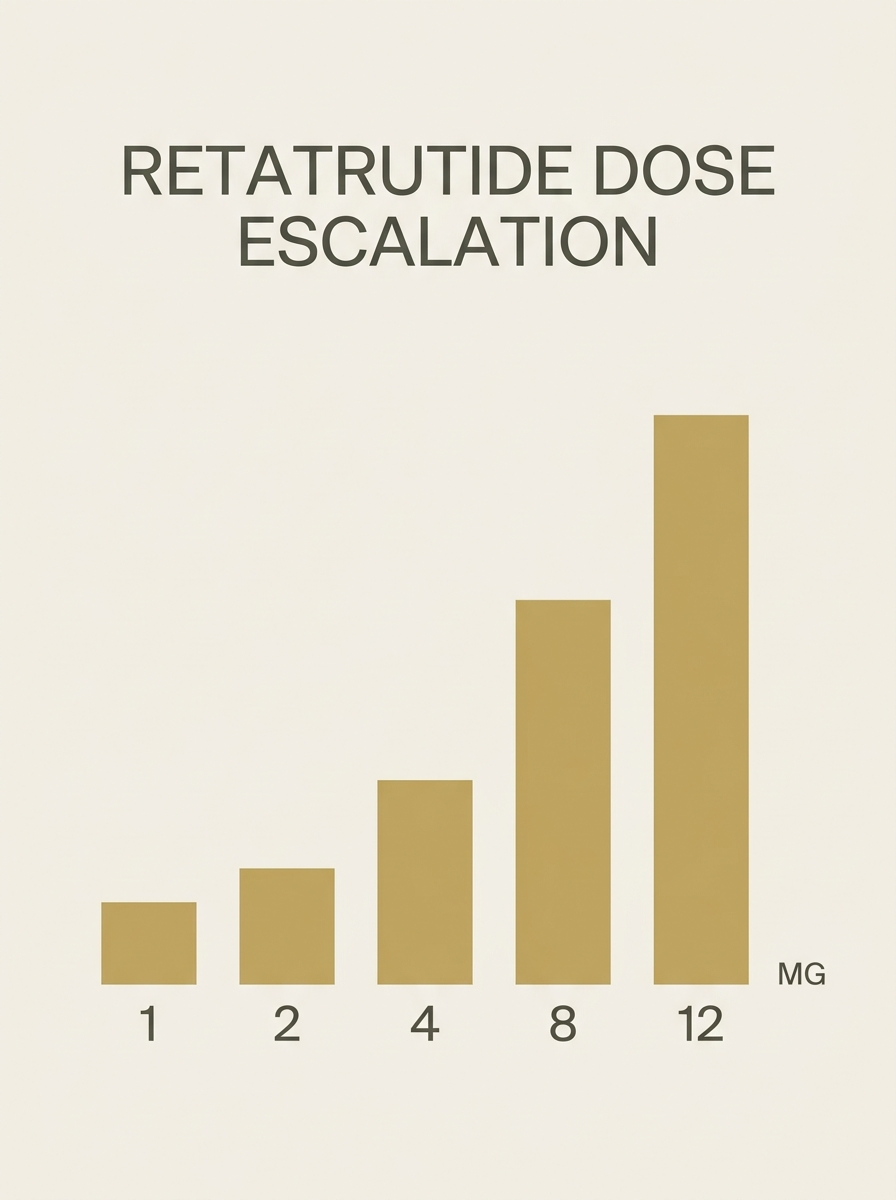
The retatrutide dose escalation chart
Here is a simple view of the trial pattern. Think of it as a staircase, not a leap. Each step held for a few weeks before the next rise.
| Stage | Weekly amount | What it was for |
|---|---|---|
| Start | About 2 mg | Let the body get used to it |
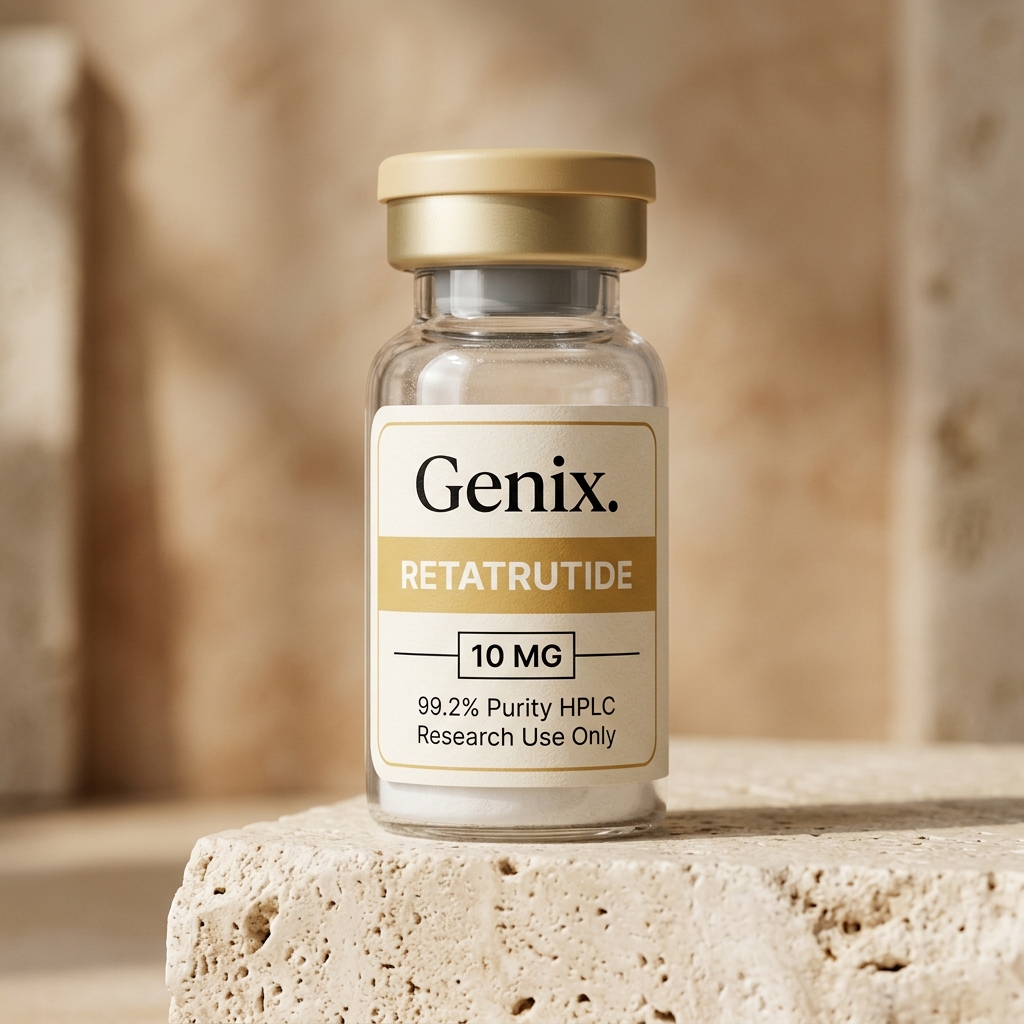
| Build | About 4 mg | Ease upward, watch side effects |
| Strong | About 8 mg | Bigger appetite and fat effect |
| Top | About 12 mg | Largest results in the trial |
This is reported trial information, shown for education. It is not a schedule for you to follow. Research programs differ, and this is for research use only.
Why step up slowly?
Starting high is what makes people feel sick. The gut needs time to adjust to the fullness signal. By starting low and rising slowly, the trials kept nausea and other stomach effects milder, so more people could stay the course.
- It gives the gut time to adjust, so nausea stays milder.
- It helps find the lowest amount that still works for a person.
- It lowers the chance of quitting early from side effects.
- It matches how every GLP-1 peptide schedule is designed.
Can you start retatrutide at 2 mg?
In the published trials, low steps like 2 mg were used as a starting point, with the amount rising from there. Charts in the research literature show a gradual climb, not a high start. A low start is the gentle end of the range studied.
Whether any amount is right for a person is a medical question, not something a blog can answer. This is a research overview only. Retatrutide is for research use only, not for human use.
Reconstitution math, explained simply
Retatrutide ships as a dry powder. In a lab, it is mixed with bacteriostatic water, or BAC water, before study. This is called reconstitution. The math is simple: the water you add sets the concentration, but it never changes how much peptide is in the vial.
| Vial | BAC water added | Result |
|---|---|---|
| 10 mg | 1 mL | 10 mg per mL |
| 10 mg | 2 mL | 5 mg per mL |
| 10 mg | 5 mL | 2 mg per mL |
Once mixed, keep the vial cold and use it within a few weeks. See How to Store Peptides in Bali for the full storage guide.
Retatrutide dosage in units on a syringe
People get confused by "units" because insulin syringes are marked in units, not mL. Here is the simple rule: on a standard insulin syringe, 100 units equals 1 mL. So units are just a fine ruler for measuring a small volume of liquid.
To turn units into an amount, you need the concentration you mixed. If a 10 mg vial holds 5 mg per mL, then 1 mL is 100 units and holds 5 mg. Half of that, 50 units, holds 2.5 mg. This is measurement math for research use only, not a protocol for human use.
| Concentration | 10 units | 20 units | 50 units |
|---|---|---|---|
| 5 mg per mL | 0.5 mg | 1 mg | 2.5 mg |
| 10 mg per mL | 1 mg | 2 mg | 5 mg |
Retatrutide dosage in mL: worked examples
Once you know the concentration, mL is easy. Divide the amount you want by the mg per mL. If a vial is mixed to 5 mg per mL and a research step calls for 4 mg, that is 0.8 mL. Keep the math on paper so nothing is guessed. This is lab measurement for research use only.
| If you want | At 5 mg per mL | At 10 mg per mL |
|---|---|---|
| 2 mg | 0.4 mL | 0.2 mL |
| 4 mg | 0.8 mL | 0.4 mL |
| 8 mg | 1.6 mL | 0.8 mL |
Can you lose weight on a low dose?
In the trials, the lowest steps were mainly a starting point. Some appetite change showed up early, but the largest fat-loss numbers came at the higher steps, like 8 and 12 mg. A low step alone showed smaller changes than the top steps.
Everyone responds a little differently. Some people feel a strong appetite shift early, others need more time. This is reported research, not a promise of any result for any person.
Weight loss results by dose
In the phase 2 trial, more was more, up to a point. Higher steps drove bigger average fat-loss numbers, which is why the schedule climbed toward 12 mg. Here is the rough shape of it, in plain words.
| Stage | Typical effect in the trial |
|---|---|
| Low steps | Appetite starts to quiet, smaller scale change |
| Middle steps | Steady, visible fat loss builds |
| Top steps | Largest average weight loss, up to ~24% |
What to expect week by week
In the trials, the story unfolded over months, not days. Appetite tended to shift first, then the scale followed. Here is the rough shape people describe, as the amount stepped up. This is reported research, not a promise for any one person.
| Time | What often showed up in research |
|---|---|
| Weeks 1 to 4 | Quieter appetite, small early changes |
| Weeks 4 to 12 | Steady, visible fat loss as steps rise |
| Weeks 12 to 24 | Bigger results at the higher steps |
| Weeks 24 to 48 | Results hold as the top step is kept |
Side effects by dose
Side effects tracked the climb. Most were stomach-related: feeling sick, loose stool, or being blocked up. They tended to show up when the amount rose and then settle as the body adjusted. Going slow is what kept them mild for most people in the trial.
- Most side effects were mild and stomach-related.
- They often appeared right after a step up, then faded.
- Slower escalation was linked to milder effects.
- This is trial data, not a prediction for any one person.
How long is a cycle of retatrutide?
The main phase 2 trial ran for 48 weeks. The amount climbed over the first months and then held. Research programs vary in length, and there is no single official cycle. This is reported trial information for education only, not a protocol for human use.
How to spot a bad or fake vial
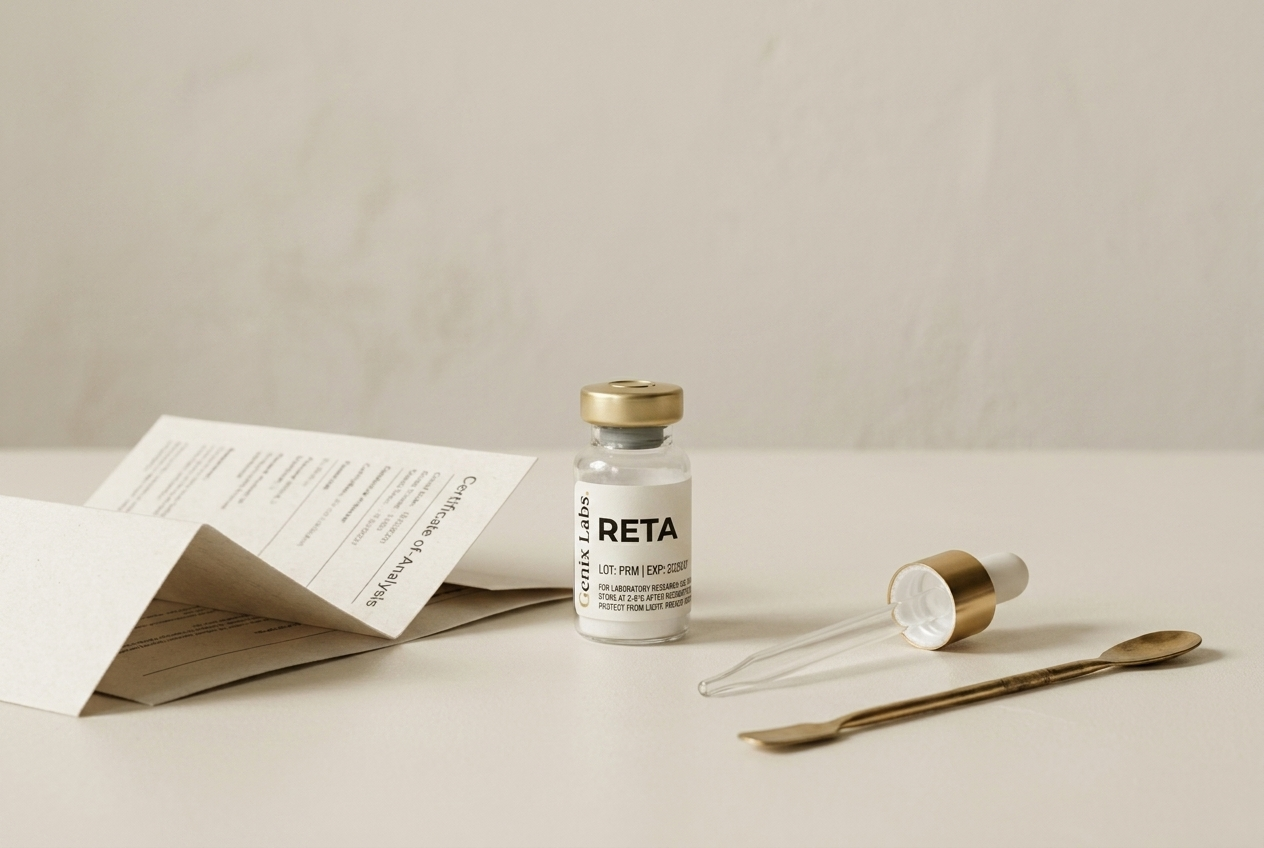
No chart helps if the vial is wrong. Under-dosed, mislabeled, or dirty product is common in this market. The best defense is a certificate of analysis, plus a few quick checks when your order arrives. If something looks off, do not use it.
- No certificate of analysis, or a lot number that does not match the vial. Walk away.
- The powder looks off: yellowed, oily, or a wet clump instead of a dry cake.
- The vial arrived warm when it should have shipped cold.
- The seal or crimp is loose, broken, or looks tampered with.
Why purity matters more than any chart
A perfect schedule means nothing if the vial is wrong. An under-dosed or dirty vial makes any chart useless and can be unsafe. That is why a certificate of analysis matters more than any number. It shows the batch was tested for purity by HPLC and identity by LC-MS.
Purity of at least 99% by HPLC, LC-MS identity, and a batch COA in every order. Cold-chain shipping and same-day delivery in Bali. From $109 (Rp 1.700.000). Research use only.
Shop lab-tested retatrutideFrequently asked questions
Can I start retatrutide at 2 mg?
In the published trials, some arms began at a low step such as 2 mg and rose slowly from there. Charts in the research literature show a gradual climb, not a high start, to let the body adjust. This is a research overview, not medical advice or a protocol for human use.
How much BAC water for 10 mg retatrutide?
Reconstitution is simple math. If you add 2 mL of bacteriostatic water to a 10 mg vial, you get 5 mg per mL. Add 1 mL and you get 10 mg per mL. The water does not change the peptide amount, only the concentration. This is lab technique for research use only.
Can you lose weight on 1 mg of retatrutide?
In trials the lowest steps were mainly a starting point, with the largest fat-loss results seen at higher steps like 8 and 12 mg. Lower steps showed smaller changes. Everyone responds differently, and this is a research overview, not medical advice.
How long is the cycle of retatrutide?
The main phase 2 trial ran for 48 weeks, with the dose stepping up over the first months and then holding. Research programs vary in length. This is reported trial information for education only, not a protocol for human use. Research use only.
Does concentration change the dose?
No. Reconstitution only changes how much liquid holds the peptide, not the milligrams in the vial. More water means a larger, easier-to-measure volume at a lower concentration. The total peptide stays the same. This is lab math for research use only.
Takeaway
In the retatrutide trials, dosing was a slow staircase: start low, rise about one step a month toward 12 mg, and hold. The slow climb kept side effects milder, and the higher steps drove the biggest results. Reconstitution is simple math, where water sets concentration, not amount. Above all, this is a research overview, not medical advice, and retatrutide is for research use only.