

People search "retatrutide side effects" because the vial comes with no leaflet. This guide lays out what the published trials actually reported: the common stomach effects, the odd skin-tingling one most sites skip, the heart-rate change, and the rare serious events. It is a research overview, not medical advice, and not a protocol for human use.
The quick answer
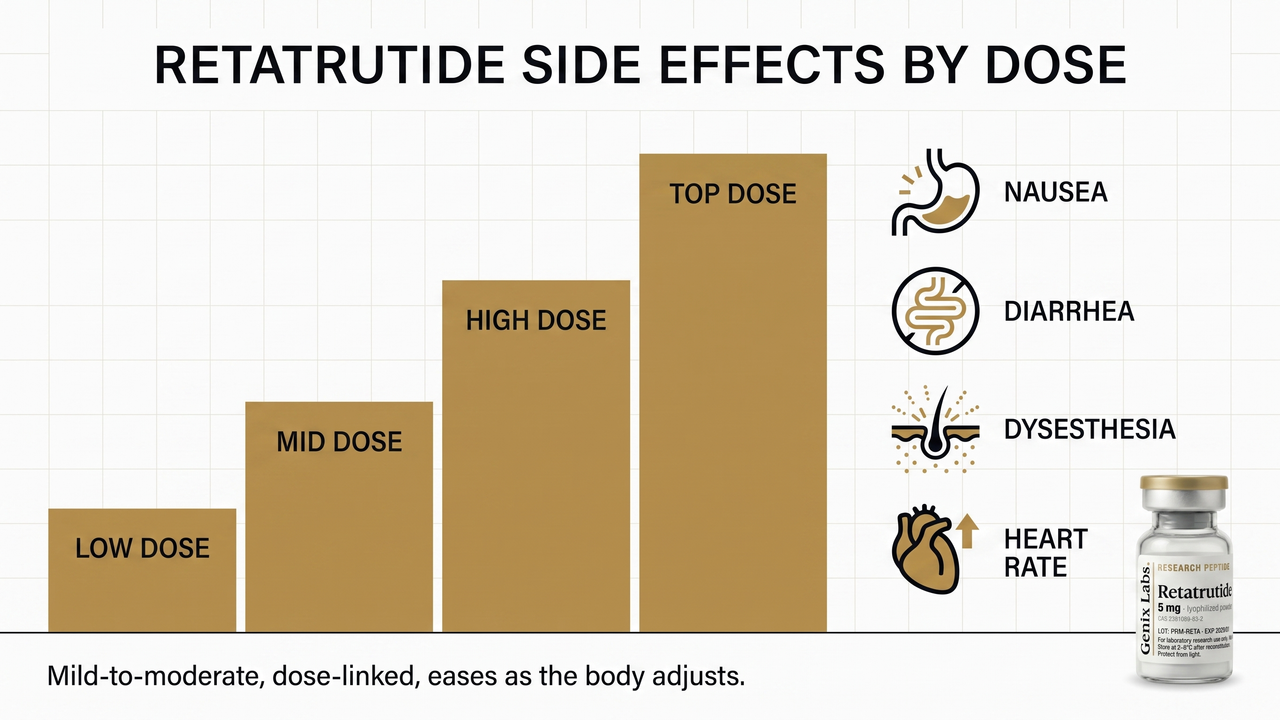
In the phase 2 trial, most retatrutide side effects were mild to moderate and came from the stomach: feeling sick, loose stool, being blocked up, and less appetite. They showed up most when the dose stepped up, then faded as the body adjusted. A slow dose climb kept them milder. Serious events were uncommon. This is trial data, not a promise for any one person.
How safe is retatrutide overall?
Retatrutide is an experimental triple-hormone peptide. It acts on three targets at once: the GLP-1, GIP, and glucagon receptors. In the phase 2 obesity trial, its safety profile looked like other GLP-1 peptides, led by stomach effects. Most people in the trial stayed on it, and the effects tended to settle over time.
The honest framing is this: retatrutide is still being studied, so its long-term safety is not fully mapped. What we have are mid-stage trial results, not decades of use. That is exactly why it is supplied for research and not as a medicine. For a plain-language look at the compound itself, see our retatrutide dosing overview.
- Most side effects were mild to moderate and stomach-related.
- They clustered around dose increases, then eased.
- Serious adverse events were uncommon in the trial.
- Long-term safety is still being studied. This is a research overview only.
What are the common retatrutide side effects?
The common ones are the same family reported across GLP-1 research: the gut reacts first. In the trial, nausea was the most reported effect, followed by diarrhea, constipation, and vomiting. Reduced appetite is often listed too, though for a weight compound that is the intended action, not a true side effect.
| Side effect | How often it showed up | Usual pattern |
|---|---|---|
| Nausea | Most common | Peaks after a step up, then eases |
| Diarrhea | Common | Comes and goes early on |
| Constipation | Common | Linked to eating and drinking less |
| Vomiting | Less common | Usually tied to a fast dose rise |
| Reduced appetite | Expected | The intended effect, not a fault |
This is reported trial information, shown for education. It is not a list of what will happen to any person, and it is not a protocol for human use.
Do the side effects change with dose?
Yes. In the trial, more dose meant more reported side effects, especially stomach ones. The higher steps, like 8 mg and 12 mg, brought more nausea than the low steps. This is the trade behind the schedule: the bigger fat-loss numbers and the bigger side-effect numbers sat at the same high steps.
| Dose stage | Side-effect load in the trial |
|---|---|
| Low steps (about 1 to 2 mg) | Fewest side effects, mostly mild |
| Middle steps (about 4 mg) | More nausea as the body adjusts |
| High steps (about 8 to 12 mg) | Most reported, still mostly manageable |
Because effects track the dose, the way you climb matters as much as where you land. That is the whole reason the trials stepped up slowly instead of starting high.
Why does retatrutide upset the stomach?
The stomach effects are not random. GLP-1 and GIP signaling slows how fast the stomach empties and turns down appetite in the brain. Slower emptying means food sits longer, which can feel like fullness, nausea, or being blocked up. It is the same mechanism that quiets hunger, seen from the other side.
- Slower stomach emptying can feel like nausea or fullness.
- Eating less can lead to constipation if fluids drop too.
- The gut adapts over weeks, which is why effects tend to fade.
- A faster dose rise gives the gut less time to adjust.
Understanding the mechanism is why the fixes later in this guide work: they all give the gut more time and less to fight against.
Do retatrutide side effects happen right away?
Often, some effects show up within the first days of a dose, because the peptide starts acting quickly. In the trials, nausea tended to appear soon after starting and soon after each step up, not weeks later. The good news is that this early bump usually settles as the body adjusts over the following days to weeks.
So the timing has two parts: a quick onset after a change, and a slow fade as the body adapts. This is reported research, not a prediction for any one person, and not a protocol for human use.
What is the skin-tingling side effect most sources miss?
One retatrutide effect stands out from the usual GLP-1 list: dysesthesia. That is an unusual skin sensation, like tingling, prickling, or a heightened sense of touch, often on the skin or scalp. It was reported in the trials, mostly at higher doses, and it faded over time for most. Many summaries skip it, so it surprises people.
Because it is dose-linked, it fits the same story as the stomach effects: more common when the dose is high or rising, and easing as the body settles. This is trial data for education, not medical advice.
Does retatrutide raise heart rate?
A small rise in resting heart rate has been reported with retatrutide, as it has across the GLP-1 peptide class. In the trials the average change was modest, but it is a real signal, which is why heart rate is one of the things research programs watch. It is one reason people with heart conditions are studied with extra care.
- A small average rise in resting heart rate was seen in trials.
- It fits a known pattern across GLP-1 peptides.
- Research programs monitor heart rate during studies.
- This is a reported trial signal, not a diagnosis or advice.
What are the worst retatrutide side effects?
The worst, meaning the serious but uncommon events, are the ones any GLP-1 research program watches closely. They were rare in the retatrutide trial, but they matter because they are the reason for medical supervision. The list below is what researchers monitor for, not a common experience.
| Serious event | Why it is watched |
|---|---|
| Severe or lasting vomiting | Can cause dehydration if not managed |
| Pancreatitis signal | Watched across the whole GLP-1 class |
| Gallbladder problems | Linked to fast weight loss in general |
| Low blood sugar | More likely if combined with other agents |
| Allergic reaction | Rare, but possible with any injectable |
These were uncommon in the research, but they are the reason retatrutide is studied under supervision and supplied for research use only. If this were a person's medicine, a doctor would watch for exactly these.
What happens when you stop retatrutide?
When a GLP-1 peptide is stopped, its appetite effect fades as it clears the body. In research on this class, appetite tends to return and some regain of lost weight is common if nothing else changes. Retatrutide does not appear to cause a classic withdrawal syndrome, but the effect simply wears off as levels drop.
In short: stopping is less about a crash and more about losing the effect. This is reported research on the GLP-1 class for education, not medical advice or a protocol for human use.
How long do retatrutide side effects last?
For most people in the trials, the common effects were strongest in the first days after a dose change and then eased over the following days to weeks. As the dose held steady at a step, the body adjusted and the effects usually settled. The pattern repeated a little with each new step up.
| Time frame | What the trials described |
|---|---|
| First few days after a change | Effects most noticeable |
| Following 1 to 2 weeks | Body adapts, effects ease |
| Holding a steady dose | Usually the calmest stretch |
| After the next step up | A smaller repeat of the pattern |
Are side effects different for women and men?
This is a common search, and the honest answer is that the core side-effect list is the same for both: mostly stomach effects. Trials of GLP-1 peptides tend to enroll more women, and some report nausea a little more often in women, but the difference is small and the effects are the same family. Body size and dose speed matter more than sex.
- The side-effect list is the same for both.
- Some GLP-1 research notes slightly more nausea in women.
- Dose speed and body size drive tolerance more than sex.
- This is general class research, not advice for any person.
Does retatrutide cause hair loss?
Hair loss is a frequent worry, but the link is indirect. Fast, large weight loss of any kind can trigger a temporary shed called telogen effluvium, where more hairs than usual enter a resting phase. This is not the peptide attacking hair follicles. It is the body reacting to rapid change, and it usually reverses as weight stabilizes.
Is there a thyroid or cancer risk with retatrutide?
This question comes from the GLP-1 class, not from retatrutide alone. Some GLP-1 medicines carry a warning about a rare thyroid tumor seen in rodents, and it is unclear whether that applies to people. Because retatrutide is in the same broad family, research programs monitor for it. There is no evidence it causes cancer in humans, and it remains under study.
The careful summary: a rodent thyroid signal exists for the class, human relevance is uncertain, and it is one reason for supervision and ongoing research. This is reported class information for education only, not medical advice or a claim about any outcome.
How do retatrutide side effects compare to semaglutide and tirzepatide?
All three share the same core side-effect family, because they all use GLP-1 signaling. The main difference is that retatrutide adds glucagon action and, in trials, drove larger average weight loss, which tends to come with a similar or slightly heavier stomach-effect load at the top doses. Dysesthesia is more of a retatrutide talking point than for the other two.
| Peptide | Targets | Side-effect notes |
|---|---|---|
| Semaglutide | GLP-1 | Classic GI effects, well studied |
| Tirzepatide | GLP-1 + GIP | Similar GI effects, often well tolerated |
| Retatrutide | GLP-1 + GIP + glucagon | Same GI family, plus dysesthesia and a heart-rate note |
For a fuller side-by-side, see retatrutide vs semaglutide vs tirzepatide and semaglutide vs tirzepatide.
How can you reduce retatrutide side effects?
In the research, the single biggest lever was pace. Starting low and stepping up slowly gave the gut time to adjust, which kept nausea milder. Beyond pace, the general habits that ease GLP-1 stomach effects are simple and well known across the class.
- Step the dose up slowly instead of starting high.
- Smaller, lighter meals ease the fullness feeling.
- Enough water helps with constipation.
- Holding a step longer lets the body settle before the next rise.
These are general observations from GLP-1 research, shown for education. They are not instructions for a person and not a protocol for human use.
What blood tests track retatrutide safety?
In a supervised study, safety is not guessed from how someone feels. It is measured. The tests below are the usual panel research programs use to watch a GLP-1 peptide, so problems get caught early rather than late.
| Test | What it watches for |
|---|---|
| Fasting glucose and HbA1c | Blood sugar control and lows |
| Lipase and amylase | Pancreas signal |
| Liver panel | General organ stress |
| Kidney function | Effects of low fluid intake |
| Heart rate and blood pressure | The class heart-rate signal |
This is what a research setting monitors, listed for education. It is not a checklist for self-use, and retatrutide is for research use only.
Who should be most cautious with retatrutide?
Even as a research compound, some groups sit at the center of the caution list because the class carries known signals. Trials tend to exclude or closely watch these groups, which tells you where the care needs to be.
- People with a history of pancreatitis or gallbladder disease.
- People with a personal or family history of certain thyroid tumors.
- People with heart rhythm concerns, given the heart-rate note.
- Anyone pregnant or breastfeeding, who are excluded from these trials.
None of this is a decision a blog can make. It is a medical judgment for a licensed doctor. We list it so the risk picture is complete.
Can a bad vial cause side effects that are not the peptide?
Yes, and this is the part most side-effect articles ignore. In the research-peptide market, a surprising share of "side effects" come from the vial, not the compound. An under-dosed, mislabeled, or contaminated vial can cause reactions that have nothing to do with retatrutide itself. A dirty solution can trigger injection-site pain, redness, or worse.
- Contamination causing injection-site redness or reaction.
- Wrong identity, so the effect is from a different compound.
- A degraded vial that has lost purity and behaves oddly.
- Bacteriostatic water or handling that was not kept clean.
This is why a certificate of analysis is a safety document, not paperwork. It shows the batch was tested for purity by HPLC and identity by LC-MS, so you can rule the vial out and know any real effect is the peptide, not a defect. See what retatrutide really costs for why cheap, untested vials cost more in the end.
What should you expect overall when taking retatrutide?
Pulling it together: in the trials, the story was a slow start, a quick bump in stomach effects after each step up, then a settle as the body adjusted. Appetite quieted early, the scale moved over months, and the biggest results and biggest side-effect load both sat at the top doses. Most effects were mild to moderate.
Remember that this is reported trial information for education. It is not a promise for any one person, and retatrutide is supplied for research use only, not for human use.
Why purity changes the whole side-effect picture
You cannot judge side effects from a vial you cannot trust. An under-dosed or contaminated vial makes every observation meaningless and can be unsafe on its own. That is why a certificate of analysis matters more than any side-effect list. It confirms the batch was tested for purity and identity before it ever reached you.
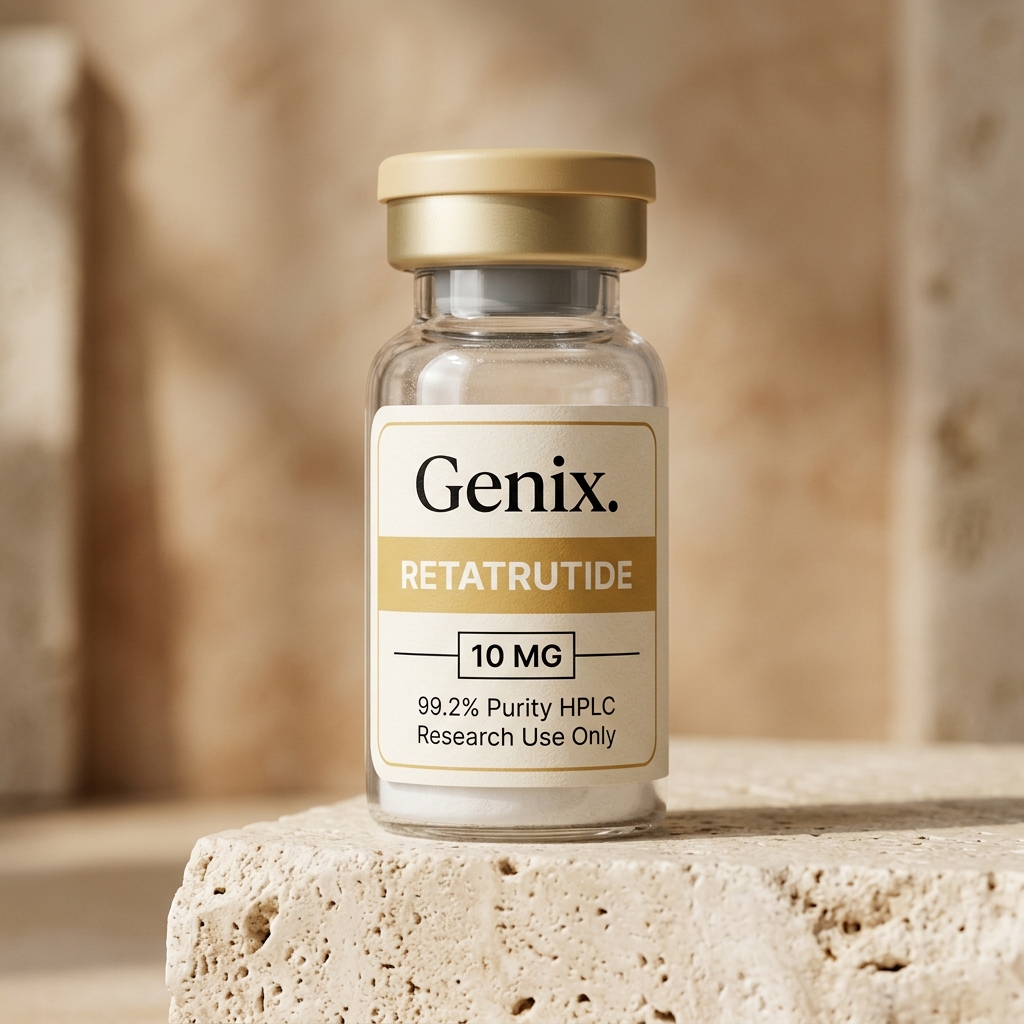
Purity of at least 99% by HPLC, LC-MS identity, and a batch COA in every order. Cold-chain shipping and same-day delivery in Bali. From $109 (Rp 1.700.000). Research use only.
Shop lab-tested retatrutideFrequently asked questions
What happens when you stop retatrutide?
As a GLP-1 peptide clears the body, its appetite effect fades. In research on this class, hunger tends to return and some regain of lost weight is common if nothing else changes. Retatrutide does not appear to cause a classic withdrawal syndrome. This is research information, not medical advice or a protocol for human use.
What are the worst side effects of retatrutide?
The serious but uncommon events researchers watch for include severe vomiting with dehydration, a pancreatitis signal, gallbladder problems, and, rarely, an allergic reaction. These were uncommon in the trial. They are the reason for medical supervision. This is a research overview, not medical advice.
Do retatrutide side effects happen right away?
Often some effects, like nausea, appear within the first days of starting and soon after each dose step up, because the peptide acts quickly. That early bump usually settles over the following days to weeks as the body adjusts. This is reported trial data, not a prediction for any person. Research use only.
What should you expect when taking retatrutide?
In the trials, expect a slow start, a short bump in stomach effects after each step up, then a settle as the body adjusts. Appetite quiets early and results build over months, with the largest effects at the top doses. This is reported research for education, not a protocol for human use.
Does retatrutide cause hair loss?
Not directly. Fast, large weight loss of any kind can trigger a temporary shed called telogen effluvium, where more hairs rest at once. It is the body reacting to rapid change, not the peptide harming follicles, and it usually reverses as weight stabilizes. This is general education, not medical advice.
Is there a thyroid or cancer risk with retatrutide?
The concern comes from the GLP-1 class, where a rare thyroid tumor was seen in rodents and human relevance is unclear. Retatrutide is monitored for it as it is still under study. There is no evidence it causes cancer in people. This is reported class information for education, not a claim about any outcome.
Takeaway
Retatrutide side effects, as reported in the trials, were mostly mild-to-moderate stomach effects that peaked after each dose rise and then eased. Dysesthesia and a small heart-rate change are the two things that set it apart, and both are dose-linked. Serious events were uncommon. A slow climb and a tested vial are what kept the picture clean. Above all, this is a research overview, not medical advice, and retatrutide is for research use only.