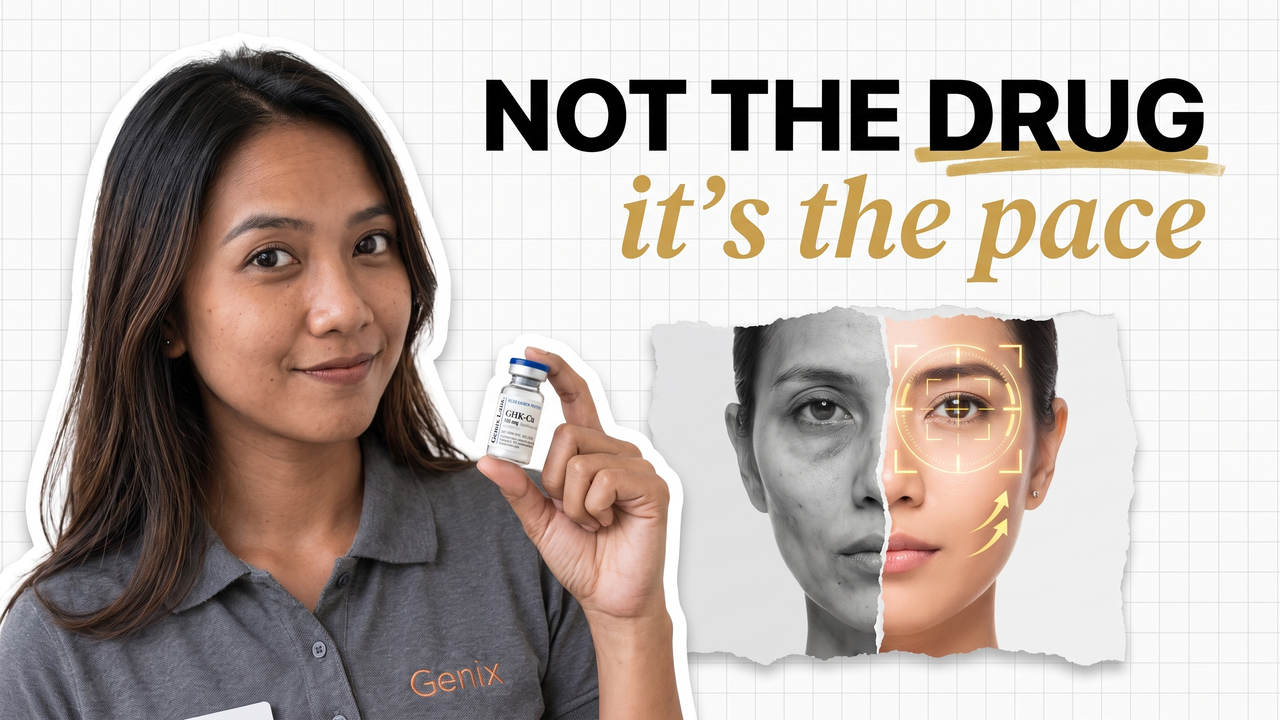
"Ozempic face" is the sunken, older look some people get after fast weight loss on GLP-1 drugs like Ozempic and Wegovy. This guide explains what it really is, why it happens, whether it goes away, and how to protect your face along the way. Everything here is general information for research use only, not medical advice.
The quick answer
Ozempic face is not a direct effect of the drug. It is what a face looks like after you lose fat fast. You lose fat from your cheeks and temples, your skin has less collagen to stay firm, and it cannot shrink to fit right away. The result can look gaunt or saggy. It often softens over time, and a slower pace protects your face.
What is Ozempic face?
Ozempic face is a nickname, not a medical diagnosis. A New York skin doctor coined it to describe the tired, hollow look he saw in patients after rapid weight loss. The cheeks flatten, the temples sink, and lines around the mouth and eyes can look deeper. The skin can also hang a little looser. It is the face version of loose skin anywhere else on a fast-shrinking body.
The same look can happen after any big, quick weight loss. It got the Ozempic name only because these drugs made fast weight loss so common. The face just shows the change first, because the skin there is thin and we all look at it closely.
Why does Ozempic face happen?
Three things stack up. First, your face carries pads of fat that give it a full, youthful shape. When you lose weight fast, those pads shrink with the rest of your body fat. Second, your skin relies on collagen to stay firm, and collagen drops as you age. Third, skin that has stretched over years cannot snap back overnight. Put together, the face can look sunken and loose.
This is why the drug is not really the villain. The exact same face can appear after weight-loss surgery or a hard diet. The peptide does its job in your gut and brain, not your cheeks. The face change is a side story of losing fat quickly.
How Ozempic drives the fast fat loss behind it
Ozempic is a brand of semaglutide, a GLP-1 drug. GLP-1 is a gut hormone that tells your brain you are full and slows how fast your stomach empties. So you eat less without fighting hunger all day. Over months, that steady calorie gap burns fat, including the fat in your face. In a large trial, adults on semaglutide lost around 15% of their body weight on average.
Fifteen percent is a lot of fat to lose. The more you lose, and the faster you lose it, the more your face can change. If you want the deeper comparison of these drugs, read our guide to semaglutide vs tirzepatide.
What are the signs of Ozempic face?
The signs are easy to spot once you know them. They tend to show up in the middle of a rapid weight-loss run, when the fat is gone but the skin has not caught up. None of these are dangerous. They are cosmetic, and most can be softened.
- Flatter, hollow cheeks that used to look full.
- Sunken temples on the sides of the forehead.
- Deeper lines around the mouth, nose, and eyes.
- Looser skin along the jaw and under the chin.
- A tired or older look, even when you feel fine.
Who is most likely to get Ozempic face?
Not everyone gets it. A few things raise the odds. The pattern is simple: the more fat you lose, the faster you lose it, and the less springy your skin already is, the more your face will show the change.
- Losing a large amount of weight, not just a few pounds.
- Losing it fast, over weeks instead of many months.
- Being older, when collagen and elasticity are already lower.
- A history of sun damage or smoking, which thin the skin.
- Starting with a fuller face that had more fat to lose.
Does Ozempic face go away?
Often, yes, at least partly. The hollow look is worst during the fastest stretch of weight loss. As your weight settles, the face usually settles too. If you regain a small amount of weight, some facial fullness comes back. Younger skin bounces back better. Deep looseness in older skin may not fully reverse on its own, and that is where treatments come in.
So Ozempic face is often reversible in the sense that it eases over time, but it is not always fully gone. The single biggest lever is pace. A slower, steadier loss gives your skin time to keep up.
How can you tell if someone is on Ozempic?
You cannot know for sure, and it is fair to say guessing is nosy. But the common tells are a fast, visible drop in weight paired with a suddenly hollow or gaunt face. People may look thinner and older at the same time, which is unusual. Remember that many things cause weight loss, so a hollow face is a hint, never proof.
How can you prevent Ozempic face?
You cannot stop your face from changing at all when you lose real fat. But you can soften it a lot. The goal is to lose fat while keeping muscle, skin quality, and a sane pace. These habits do the most work.
- Lose weight at a steady pace, not a crash, so skin keeps up.
- Eat enough protein to hold on to muscle, not just fat.
- Do resistance training to keep the shape under your skin.
- Stay hydrated, and protect your skin from sun damage.
- Support skin quality with proven skincare and, if you choose, studied peptides.
What are the treatment options for Ozempic face?
Because Ozempic face is mostly lost volume plus looser skin, the treatments target those two things. They range from free habits to in-clinic procedures. Here is the honest lineup, from gentlest to strongest.
| Option | What it targets | How strong | Notes |
|---|---|---|---|
| Slow the weight loss | Prevents new hollowing | Best first step | Free, and it works |
| Protein and resistance training | Keeps muscle and shape | Strong base | Do this no matter what |
| Skincare and skin peptides | Skin firmness and quality | Supportive | Research use only |
| Dermal fillers | Replaces lost volume | Strong, in clinic | Done by a licensed doctor |
| Fat transfer or biostimulators | Rebuilds structure | Strongest, in clinic | Surgical or injected in clinic |
Where do skin-recovery peptides fit?
Volume that is gone needs volume put back, so fillers or fat handle the sunken part. Skin quality is a different lever. Copper peptides like GHK-Cu are the best-studied peptides for skin. GHK-Cu is a small copper-binding molecule your body already makes to repair skin, and your levels of it fall as you age. In lab and skin research it supports collagen and skin remodeling.
Here is the honest line. A copper peptide will not refill a hollow cheek the way a filler does. What it is studied for is firmer, better-quality skin over a cycle. Think of it as skin support that pairs with the pace and protein work, not a magic fix for lost fat. It is a research peptide, sold for research use only. Our deep dive on copper peptides covers the science in full.
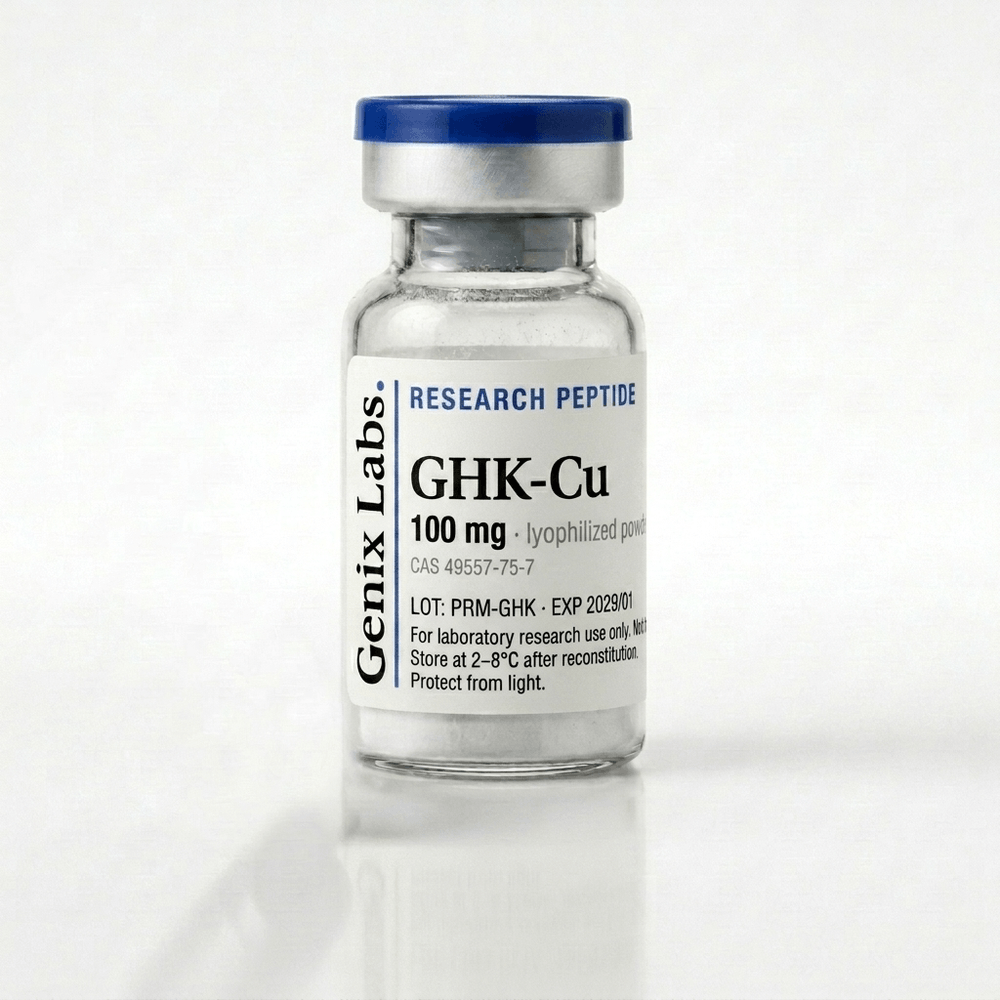
The blended option is KLOW, which pairs GHK-Cu with three repair peptides in one vial. Both are for research use, and neither replaces a doctor for the drug side of your plan.
Ozempic face before and after: the timeline
People expect a change overnight. It does not work that way. The face tracks your fat loss, which builds over months. Here is the rough shape of what people report, keeping in mind that everyone is different.
- First weeks: little visible face change while weight starts to drop.
- Two to four months: the hollow look is often at its most obvious.
- Six months plus: as weight settles, the face usually settles too.
- After you stabilize: firmness can slowly improve, faster in younger skin.
Does Ozempic face affect men?
Yes. Men lose facial fat the same way women do. Men often carry a bit more structure in the jaw and brow, so the hollow-cheek look can read as gaunt rather than saggy. The prevention playbook is the same: steady pace, plenty of protein, resistance training, and skin care. Nothing here is unique to one gender.
Why do celebrities show Ozempic face?
Celebrities show it because they lose weight fast, they are often older, and cameras catch every angle in bright light. The internet turned it into a meme, but the cause is the same for a movie star as for anyone else. Fast fat loss, aging collagen, and skin that lags. The only difference is the size of the audience watching it happen.
What Reddit gets right and wrong
Reddit threads get one big thing right: pace matters, and protein plus lifting protects your look. Where they go wrong is the miracle claims. No supplement refills a cheek. Some posts also blame the drug itself, when the real cause is the speed of fat loss. Read the lived experience, but weigh it against the simple science.
What organ is Ozempic hard on?
This is a common worry, so here is a straight answer. Ozempic works mostly through the gut, so the most common issues are stomach ones: nausea, and a stomach that empties slowly. Doctors also watch the pancreas and the gallbladder, since these drugs carry warnings for pancreatitis and gallstones. There is a boxed warning about thyroid tumors seen in rodents. This is a prescription medicine, so those questions belong with the doctor who prescribes it.
Skin-support research peptides in Bali
If skin quality is the lever you want to work on, Genix Labs delivers lab-tested GHK-Cu across Bali, often within 2 hours in Canggu, Seminyak, Ubud, Sanur, and Denpasar. Every order ships cold with a batch certificate of analysis. Order before 9 PM to ship the same day, with cash on delivery.
Purity of at least 99% by HPLC, LC-MS identity, and a batch certificate of analysis in every order. From $69, same-day in Bali. Research use only.
Buy GHK-Cu in BaliFrequently asked questions
Does Ozempic face go away?
Often, at least partly. The hollow look is worst during the fastest stretch of weight loss. As your weight settles, the face usually settles too, and regaining a little brings back some fullness. Younger skin bounces back better. Deep looseness in older skin may need in-clinic treatment to fully reverse.
How can you tell if someone is on Ozempic?
You cannot know for sure. The common tells are a fast, visible drop in weight paired with a suddenly hollow or gaunt face, so the person looks thinner and older at once. But many things cause weight loss, so a hollow face is only a hint, never proof, and guessing is nosy.
How do you prevent Ozempic face?
You cannot stop your face from changing when you lose real fat, but you can soften it. Lose weight at a steady pace instead of a crash, eat enough protein, do resistance training to keep muscle, stay hydrated, and protect your skin from sun. Slowing the pace is the single biggest lever.
What organ is Ozempic hard on?
Ozempic works mostly through the gut, so the most common issues are stomach ones like nausea and slow emptying. Doctors also watch the pancreas and gallbladder, since these drugs carry pancreatitis and gallstone warnings, plus a boxed warning about thyroid tumors seen in rodents. Ask the prescribing doctor.
Can skin peptides help with Ozempic face?
Not for the hollow part. Lost fat volume needs fillers or fat transfer to refill. Copper peptides like GHK-Cu are studied for skin firmness and collagen, so they support skin quality as your face settles, but they do not replace lost fat. They are research peptides, sold for research use only.
Takeaway
Ozempic face is not the drug attacking your face. It is fast fat loss showing up first in thin facial skin, on top of collagen that drops with age. It often eases as your weight settles, and a slower pace with protein and lifting protects it best. Fillers replace lost volume, while studied skin peptides like GHK-Cu support skin quality, for research use only. This guide is education, not medical advice. Explore more in our Weight and Metabolism hub.