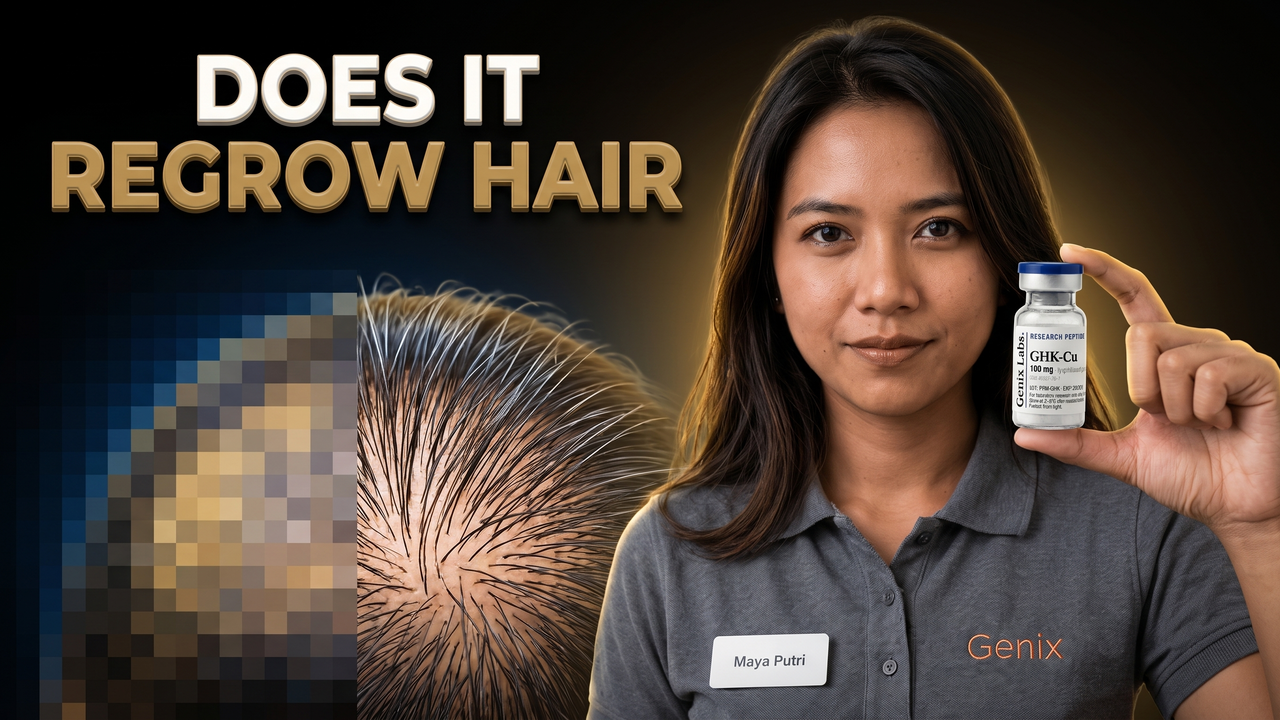
Copper peptides are all over the hair-loss aisle, from serums to scalp injections. The claims are big, so it is worth separating what the research supports from what the marketing promises. This guide covers GHK-Cu for hair in plain words: does it work, how to use it, and the honest downsides. It is a research overview, not medical advice.
The quick answer
GHK-Cu is the copper peptide most studied for skin and hair. Research points to thicker, denser-looking hair and a healthier scalp, mainly by improving blood flow and follicle signals. It is not a proven cure for genetic baldness. Think fuller-looking hair, not brand-new hair on bald skin. It is sold for research use only.
What is GHK-Cu copper peptide?
GHK-Cu is a tiny peptide of three amino acids bound to a copper atom. Your body already makes it to help repair skin and tissue, but levels drop as you age. In research and cosmetics, it is used to rebuild collagen, firm skin, and support the scalp. Learn the full story in our longevity guides and the Longevity & Anti-Aging hub.
Do copper peptides actually regrow hair?
Research suggests copper peptides can support thicker, denser-looking hair and a healthier scalp, mainly by improving blood flow and follicle signals. They are not a proven cure for genetic baldness. Think fuller-looking hair and better scalp health, not brand-new hair on bald skin. This is research use only.
The honest picture is promising but mixed. The strongest lab data shows copper peptides helping skin and follicle repair. Human hair trials are smaller and fewer, so the effect in people is real but modest, and it builds slowly.
How copper peptides work on hair
The leading idea is two-part. First, copper peptides support blood flow to the scalp, so follicles get more of what they need. Second, they are studied for nudging follicles to stay in their active growth phase for longer. Together, that points to fuller, denser-looking hair over a cycle.
How to use copper peptide for hair
In research and cosmetics, GHK-Cu is applied to a clean, dry scalp as a serum, usually once daily, and left on. It is kept away from strong acids and retinol at the same time, which can break the copper bond. Genix sells GHK-Cu for research use only, so this describes study use, not a treatment.
- Applied to a clean, dry scalp, then left on.
- Kept separate from strong acids and retinol in the same routine.
- Run over an 8 to 12 week cycle, since results are slow.
- Stored cold and out of light to keep the copper bond stable.
Serum, injection, or oral?
Copper peptides for hair show up in three forms. Topical serums are the most common. Scalp injections, sometimes called mesotherapy, are studied for deeper delivery. Oral copper peptides are the least supported, because so little survives digestion.
| Form | How it is used | Evidence |
|---|---|---|
| Topical serum | Applied to the scalp daily | Most common, easiest |
| Scalp injection | Delivered under the skin | Studied for deeper reach |
| Oral | Swallowed as a capsule | Weakest, digestion is a barrier |
What are the downsides of copper peptides?
The main downsides are slow, subtle results over months, and mixed human evidence, since much of the strong data is from lab and animal work. Some people get scalp irritation from serums. Copper peptides can also clash with strong acids or retinol used at the same time.
What did celebrities use for hair loss?
Matthew McConaughey has credited a laser-cap device, not a peptide, for keeping his hair. Jennifer Lopez has promoted her own gentle haircare line, not a specific injection. These are personal stories and marketing, not proof for any product. Copper peptides like GHK-Cu are a separate, research-only path, and should be judged on the research, not a famous name.
Results: what before and after really looks like
Honest before-and-after with copper peptides is gradual. Early on, the scalp often looks healthier and hair feels a little thicker. Over a full cycle, density can look fuller in thinning areas. It rarely creates new hair on fully bald skin. Real results are subtle and slow.
| Time | What people tend to notice |
|---|---|
| Weeks 1 to 4 | Healthier-looking scalp, less shedding for some |
| Weeks 4 to 8 | Hair feels slightly thicker to the touch |
| Weeks 8 to 12 | Thinning areas can look fuller and denser |
Why purity matters more than hype
A copper peptide is only as good as the vial it comes in. An under-dosed or badly made product will not do what the research describes, no matter the claims on the box. That is why a certificate of analysis matters most. It shows the batch was tested for purity by HPLC and identity by LC-MS.
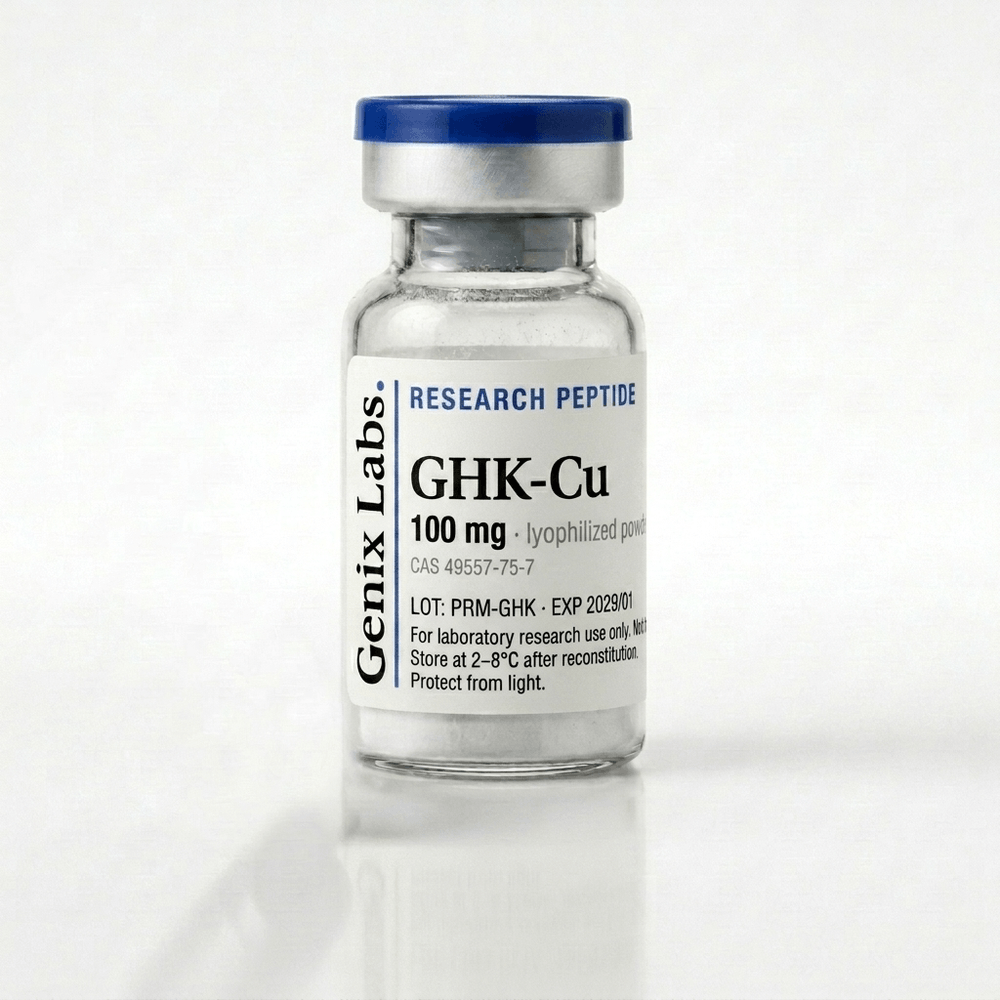
Purity of at least 99% by HPLC, LC-MS identity, and a batch COA in every order. Cold-chain shipping and same-day delivery in Bali. From $69 (Rp 1.090.000). Research use only.
Shop lab-tested GHK-CuFrequently asked questions
Do copper peptides actually regrow hair?
Research suggests copper peptides can support thicker, denser-looking hair and a healthier scalp, mainly by improving blood flow and follicle signals. They are not a proven cure for genetic baldness. Think fuller-looking hair and better scalp health, not brand-new hair on bald skin. This is research use only.
What are the downsides of copper peptides?
The main downsides are slow, subtle results over months, and mixed human evidence, since much of the strong data is from lab and animal work. Some people get scalp irritation from serums. Copper peptides can also clash with strong acids or retinol used at the same time.
What did Matthew McConaughey use to stop hair loss?
Matthew McConaughey has credited a laser-cap device rather than any peptide for keeping his hair. That is his personal story, not proof for any product. Copper peptides like GHK-Cu are a separate, research-only path studied for scalp and hair density. This is not medical advice.
What did Jennifer Lopez use for hair loss?
Jennifer Lopez has promoted her own haircare line focused on gentle, nourishing ingredients, not a specific peptide injection. Celebrity routines are marketing, not evidence. If you are curious about copper peptides, judge them on the research, not a famous name. GHK-Cu is for research use only.
How do you use copper peptide for hair?
In research and cosmetics, GHK-Cu is applied to a clean, dry scalp as a serum, usually once daily, and left on. It is kept away from strong acids and retinol at the same time. Genix sells GHK-Cu for research use only, so this describes study use, not a treatment.
Takeaway
Copper peptides, and GHK-Cu in particular, are studied for thicker, denser-looking hair and a healthier scalp, mainly through blood flow and follicle support. They are a slow, steady help, not a cure for baldness, and the human evidence is real but modest. Judge any product on its testing, not its promises. GHK-Cu is for research use only, and this guide is education, not medical advice.