Search “peptides for hair loss” and you get a wall of serums, injections, and bold before-and-after photos. Some of it is backed by research. A lot of it is marketing. This guide ranks the peptides people actually study for hair, in plain words: what works, what is hype, how they stack up against minoxidil, and the honest results to expect. It is a research overview, not medical advice.
The quick answer
For hair, the peptide with the most research behind it is GHK-Cu, a copper peptide. It is studied for thicker, denser-looking hair and a healthier scalp, mainly by supporting blood flow and the follicle growth phase. Cosmetic hair serums also use smaller peptides. None of them are a proven cure for genetic baldness. Peptides are a slow, steady support, and every one here is sold for research use only.
What are peptides for hair loss?
Peptides are short chains of amino acids, the same building blocks that make up proteins. Because they are small, they can carry signals to cells. In hair research, peptides are studied for one job: telling the scalp and follicles to behave more like young, healthy ones. That means better blood flow, longer growth phases, and steadier repair.
Two very different products both get called “hair peptides.” The first is cosmetic peptides blended into over-the-counter serums, like biotinoyl tripeptide-1 or acetyl tetrapeptide-3. The second is research peptides like GHK-Cu, studied on their own at higher purity. This guide focuses on the research peptides, with an honest look at the cosmetic ones too.
- Peptides send repair and growth signals to the scalp.
- GHK-Cu is the research peptide with the strongest hair story.
- Cosmetic serums use smaller peptides at lower strength.
- None replaces proven options like minoxidil; they complement.
Do peptides for hair loss really work?
Research suggests some peptides, mainly GHK-Cu, can support fuller, denser-looking hair and a healthier scalp. The effect is real but modest, and it builds slowly. Peptides are not a proven cure for genetic baldness. Think steady support over months, not overnight regrowth. This is research use only.
The honest picture is promising but mixed. The strongest data on copper peptides comes from lab and skin-repair work, where they clearly help tissue rebuild. Human hair trials are smaller and fewer, so the effect in real people is gentle and gradual. Anyone promising thick new hair in weeks is selling, not citing. Our deeper dive on copper peptides for hair walks through the evidence in detail.
What is the best peptide for hair loss?
The best-studied peptide for hair is GHK-Cu, the copper tripeptide your body already makes to repair skin and tissue. Levels drop as you age. In research and cosmetics, it is used to rebuild collagen, firm skin, and support the scalp, which is why it shows up in serious hair research more than any other single peptide.
“Best” still depends on your goal. For overall scalp and follicle support, GHK-Cu leads. For a simple daily topical, cosmetic peptide serums are the easy on-ramp. For proven regrowth on pattern hair loss, minoxidil has the biggest human evidence, and peptides are studied alongside it, not instead of it.
| Goal | Best-studied option | What to expect |
|---|---|---|
| Scalp + follicle support | GHK-Cu copper peptide | Fuller-looking density, slow build |
| Easy daily topical | Cosmetic peptide serum | Gentle support, mild effect |
| Proven pattern-loss regrowth | Minoxidil (then add peptides) | Strongest human evidence |
Which peptides are studied for hair?
Not every peptide belongs in a hair conversation. Here are the ones that actually come up in research and cosmetics, and how strong the case is for each.
GHK-Cu (copper tripeptide-1)
The headliner. GHK-Cu is studied for scalp blood flow, collagen around the follicle, and keeping follicles in their active growth phase. It has the deepest research base of any hair peptide and is the copper peptide most serums copy. It is our stocked product, sold for research use only.
Cosmetic peptides (biotinoyl tripeptide-1, acetyl tetrapeptide-3)
These are the peptides you see on the back of drugstore hair serums, often paired with caffeine or licorice root. They are gentle and easy to use, but the strength is low and the effect is mild. They are best seen as light daily support, not a heavy hitter.
TB-500 and thymosin beta-4
TB-500 is a fragment linked to thymosin beta-4, a repair peptide. Lab work has shown thymosin beta-4 can activate hair-follicle stem cells in animals, which is intriguing but early. There is no strong human hair-growth trial. Read the full picture in our TB-500 guide.
Sermorelin and other growth-hormone peptides
Some sites list growth-hormone peptides like sermorelin for hair. The link is indirect at best, working through general repair rather than any proven hair effect. Treat hair claims here as a stretch, not settled science.
BPC-157
BPC-157 is a repair peptide studied mainly for the gut and tendons. It is popular, so people ask about hair, but there is no real human hair-growth evidence. More on that below.
How do peptides help hair grow?
The leading idea has three parts. First, peptides support blood flow to the scalp, so follicles get more oxygen and nutrients. Second, they are studied for nudging follicles to stay in their active growth phase, called anagen, for longer. Third, they help calm and repair the scalp, which can mean less shedding. Together, that points to fuller, denser-looking hair over a cycle.
Notice what is not on that list: peptides are not thought to block DHT, the hormone behind most genetic hair loss. That is a big reason they support hair rather than reverse pattern baldness, and why they pair well with options that work on hormones or growth from a different angle.
Which is better, minoxidil or peptides?
Minoxidil has stronger, larger human trials and is a proven over-the-counter option for pattern hair loss. Peptides like GHK-Cu have lighter human evidence and are studied as a gentle complement, not a replacement. Many research setups look at using them together, not one instead of the other.
| Minoxidil | Peptides (GHK-Cu) | |
|---|---|---|
| Human evidence | Large, well-established | Smaller, promising |
| Main action | Boosts blood flow, extends growth phase | Scalp repair + follicle signals |
| Availability | Over-the-counter drug | Research use only |
| Common downside | Shedding at first, dryness | Slow, subtle results |
| Best role | The proven base | Gentle add-on support |
Can BPC-157 regrow hair?
There is no solid human evidence that BPC-157 regrows hair. It is studied mainly for tissue and gut repair, not the scalp. Any hair claims are guesses based on its blood-flow effects, not real hair trials. For hair, GHK-Cu is the far better-studied peptide.
BPC-157 is a genuinely interesting repair peptide, just not for this job. If you are curious about what it is actually studied for, see our BPC-157 benefits guide. Pointing a gut- repair peptide at your scalp is a common mix-up, and one worth avoiding.
Do peptides for hair loss work for women?
Copper peptides like GHK-Cu are studied in both men and women, because they act on scalp health and follicle signals rather than male hormones. That matters: many hair treatments that target DHT are aimed mainly at men, while peptides work on a more neutral pathway. It is one reason so many topical hair serums marketed to women lean on peptides.
The honest caveat is the same for everyone. Results are gradual and modest, and thinning driven by hormones, stress, or health conditions may need a different approach. Peptides support the scalp; they do not diagnose the cause. This is a research overview, not medical advice.
Serum, injection, or oral?
Peptides for hair show up in three delivery forms, and they are not equal. Topical serums are the most common and the easiest. Scalp injections, sometimes called mesotherapy, are studied for deeper delivery. Oral peptides are the weakest for hair, because so little survives digestion intact.
| Form | How it is used | Evidence for hair |
|---|---|---|
| Topical serum | Applied to a clean, dry scalp daily | Most common, easiest to run |
| Scalp injection | Delivered just under the skin | Studied for deeper reach |
| Oral capsule | Swallowed | Weakest, digestion is a barrier |
Whatever the form, storage and mixing matter. A copper peptide that has degraded will not do what the research describes. Our guides on reconstituting peptides and storing them in a hot climate cover how to keep a vial stable.
What are the side effects of peptides for hair loss?
For topical use, the most common issue is scalp irritation, redness, or itching, usually mild. With copper peptides, mixing them with strong acids or retinol in the same routine can break the copper bond and cause irritation. Injections carry the usual risks of any injection, like soreness or redness at the site.
- Scalp irritation or itch from topical serums.
- Clashes when copper peptides meet strong acids or retinol.
- Redness or soreness at an injection site.
- Slow, subtle results that test patience more than skin.
Because these are sold for research use only, this is not a list of human side effects from a treatment. It describes what the research literature and cosmetic testing tend to report. Always judge a product on its testing, not its promises.
Results: what before and after really looks like
Honest before-and-after with hair peptides is gradual. Early on, the scalp often looks healthier and hair feels a little thicker. Over a full cycle, density can look fuller in thinning areas. It rarely creates new hair on fully bald skin. Real change is subtle and slow, which is exactly why the marketing photos oversell it.
| Time | What people tend to notice |
|---|---|
| Weeks 1 to 4 | Healthier-looking scalp, less shedding for some |
| Weeks 4 to 8 | Hair feels slightly thicker to the touch |
| Weeks 8 to 12 | Thinning areas can look fuller and denser |
| Beyond 12 weeks | Gains hold with steady use, not a sudden jump |
Common mistakes people make
Most disappointment with hair peptides comes down to a handful of avoidable errors. Getting these right is often the difference between “nothing happened” and a real, if modest, result.
- Expecting regrowth on bald skin. Peptides thicken and support; they do not resurrect dead follicles.
- Quitting at week 4. The change shows up over a full cycle, not in the first month.
- Layering copper peptides with strong acids or retinol at the same time, which can break the copper bond.
- Chasing hyped peptides like BPC-157 for hair instead of the better-studied GHK-Cu.
- Buying an untested vial. Without a certificate of analysis, you do not know what is really inside.
Why purity matters more than hype
A peptide is only as good as the vial it comes in. An under-dosed or badly made product will not do what the research describes, no matter the claims on the box. That is why a certificate of analysis matters most. It shows the batch was tested for purity by HPLC and identity by LC-MS, with a real lot number you can match to your vial.
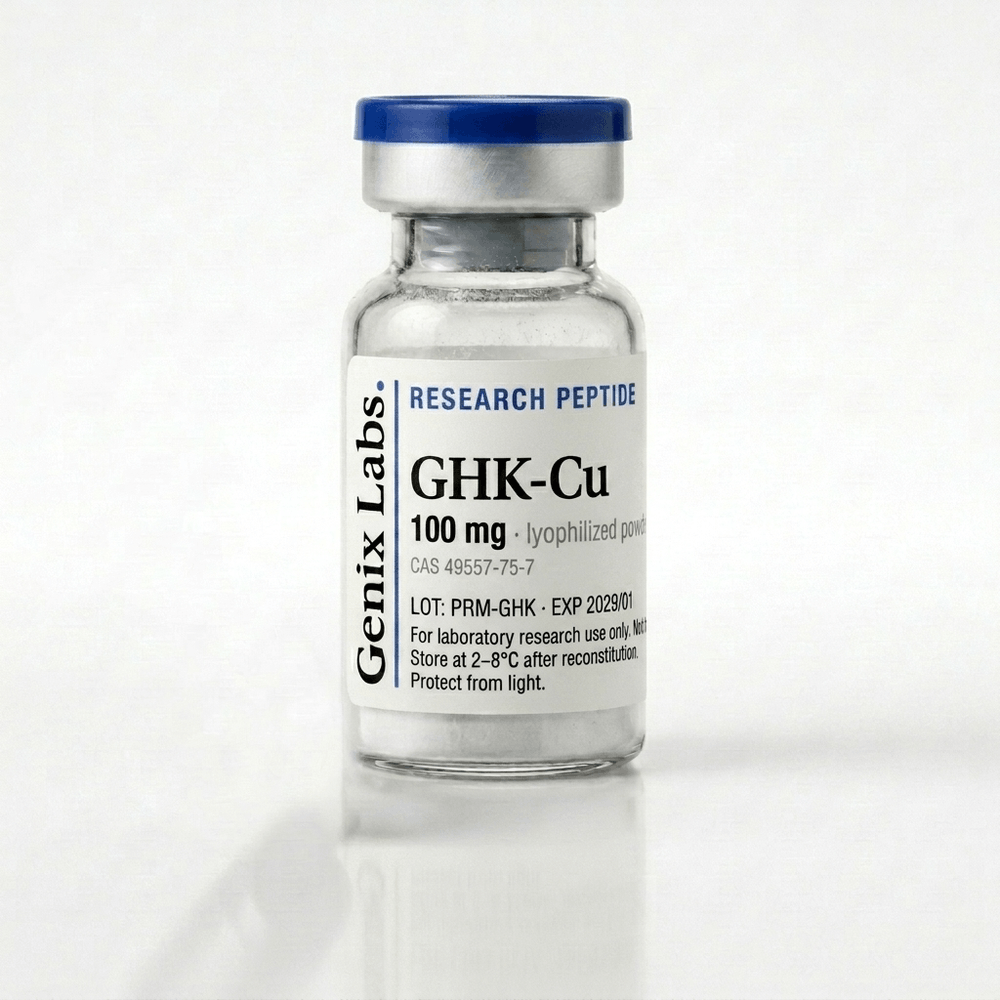
Purity of at least 99% by HPLC, LC-MS identity, and a batch COA in every order. Cold-chain shipping and same-day delivery in Bali. From $69 (Rp 1.090.000). Research use only.
Shop lab-tested GHK-CuFor the wider picture on aging peptides, the Longevity & Anti-Aging hub connects GHK-Cu to the rest of the family, and NAD+ for energy and aging covers another peptide people pair with a good skin-and-hair routine.
Frequently asked questions
What is the best peptide for hair loss?
GHK-Cu, a copper peptide, has the most research behind it for hair and scalp health. It is studied for thicker, denser-looking hair by supporting blood flow and the follicle growth phase. Cosmetic serums also use peptides like biotinoyl tripeptide-1. All are for research use only.
Do peptides for hair loss really work?
Research suggests some peptides, mainly GHK-Cu, can support fuller, denser-looking hair and a healthier scalp. The effect is real but modest and slow. Peptides are not a proven cure for genetic baldness. Think steady support over months, not overnight regrowth. This is research use only.
Which is better, minoxidil or a peptide?
Minoxidil has stronger, larger human trials and is a proven over-the-counter option for pattern hair loss. Peptides like GHK-Cu have lighter human evidence and are studied as a gentle complement, not a replacement. Many research setups look at using them together, not one instead of the other.
Can BPC-157 regrow hair?
There is no solid human evidence that BPC-157 regrows hair. It is studied mainly for tissue and gut repair, not the scalp. Any hair claims are guesses based on its blood-flow effects, not real hair trials. For hair, GHK-Cu is the better-studied peptide. Research use only.
Do peptides for hair loss work for women?
Copper peptides like GHK-Cu are studied in both men and women, since they act on scalp health and follicle signals rather than male hormones. Many topical hair serums for women use peptides for this reason. Results are gradual and modest. This is a research overview, not medical advice.
How long do peptides take to work on hair?
In research and cosmetic use, peptides for hair are run over a slow cycle. People tend to notice a healthier scalp first, then hair that feels thicker, and fuller-looking density over about eight to twelve weeks. Week-to-week change is subtle. It is a slow, steady process.
Takeaway
Peptides for hair loss are real research tools, not magic. GHK-Cu leads the field, studied for thicker, denser-looking hair through blood flow, follicle signals, and scalp repair. Cosmetic peptides are a gentle add-on, BPC-157 is hype for hair, and minoxidil still holds the strongest human evidence. Peptides support the scalp; they do not cure baldness. Judge any product on its testing, not its promises. Every peptide here is for research use only, and this guide is education, not medical advice.