People search "BPC-157 dosing" because the vial ships as a plain powder, with no chart inside. This guide explains what dosing means, how the research handled the amount, and the simple reconstitution math, all in plain words. It is a research overview, not medical advice or a protocol for human use.
The quick answer
BPC-157 dosing has two parts: how much, and how often. In animal research it was studied in small amounts scaled to body weight, usually once a day. There is no official human chart, because human trials do not exist yet. The vial holds a set amount, and water only decides how that amount is measured out.
How BPC-157 dosing works
Think of dosing as a recipe with two numbers. The first is the amount of peptide. The second is how often it is given. In the research, BPC-157 was usually studied on a daily rhythm, in small amounts. New to the compound? Start with BPC-157: What It Is and How It Works for the full background.
How much BPC-157 should a person take daily?
There is no settled human daily amount, because most BPC-157 research is animal work. Studies report amounts scaled to body weight, not a fixed human number. Any real amount is a medical question a blog cannot answer. BPC-157 is for research use only, not human use.
What the research does agree on is the shape: small amounts, given regularly, over a set number of weeks. That pattern is why people talk about a "cycle" rather than a single shot.
Reconstitution math, explained simply
BPC-157 ships as a dry powder. In a lab it is mixed with bacteriostatic water, or BAC water, before study. This is called reconstitution. The math is simple: the water you add sets the concentration, but it never changes how much peptide is in the vial.
Once mixed, keep the vial cold and use it within a few weeks. See How to Store Peptides in Bali for the full storage guide.
Turning a vial into units and mL
People get confused by "units" because insulin syringes are marked in units, not mL. The rule is simple: on a standard insulin syringe, 100 units equals 1 mL. So units are just a fine ruler for a small volume of liquid.
| Concentration | 10 units | 20 units | 50 units |
|---|---|---|---|
| 5 mg per mL | 0.5 mg | 1 mg | 2.5 mg |
| 10 mg per mL | 1 mg | 2 mg | 5 mg |
To turn units into an amount, you need the concentration you mixed. This is measurement math for research use only, not a protocol for human use.
Injection site: local versus systemic
A big BPC-157 talking point is where it is placed. In research, it is studied both near an injured spot and away from it. BPC-157 tends to work locally, which is why it is often paired with TB-500 for wider reach. Learn more in TB-500: The Systemic Recovery Peptide.
- BPC-157 is studied as a local repair peptide for one spot.
- TB-500 travels the body, so it is studied for whole-body reach.
- The two are researched together as a repair stack.
- Where and how much are research design choices, not human advice.
What should you not mix with BPC-157?
In a lab, BPC-157 is reconstituted with bacteriostatic water only. It is not mixed with other peptides in the same syringe unless a study calls for it, and drug interactions in people are untested. Because the human picture is unclear, mixing questions belong with a doctor. This is research use only.
Is BPC-157 hard on the liver?
In animal research, BPC-157 has actually been studied for protecting the liver and gut, not harming them. But there is no long-term human safety data to lean on. So the honest answer is that liver effects in people are simply not established. Ask a doctor about your own health.
Which peptide does Joe Rogan take?
Joe Rogan has talked publicly about using BPC-157 for injury recovery on his podcast. That is a personal anecdote, not medical proof. What a public figure says he uses is not a dosing guide. BPC-157 is sold for research use only, not for human use.
How long is a BPC-157 cycle?
In research, BPC-157 is often studied across a four to six week window, given regularly, then stopped. There is no single official cycle, and programs vary. This is reported research shape for education only, not a protocol for human use.
| Stage | What the research pattern looks like |
|---|---|
| Start | Small daily amount, watch how tissue responds |
| Middle | Steady daily rhythm across a few weeks |
| End | Taper off as the study window closes |
Why purity beats any dose chart
A perfect schedule means nothing if the vial is wrong. An under-dosed or dirty vial makes any chart useless and can be unsafe. That is why a certificate of analysis matters more than any number. It shows the batch was tested for purity by HPLC and identity by LC-MS.
Quick checks on arrival
- A certificate of analysis with a lot number that matches the vial.
- A dry, even cake of powder, not a yellowed or oily clump.
- A vial that arrived cold, with the seal and crimp intact.
- HPLC purity of at least 99% and LC-MS identity on the report.
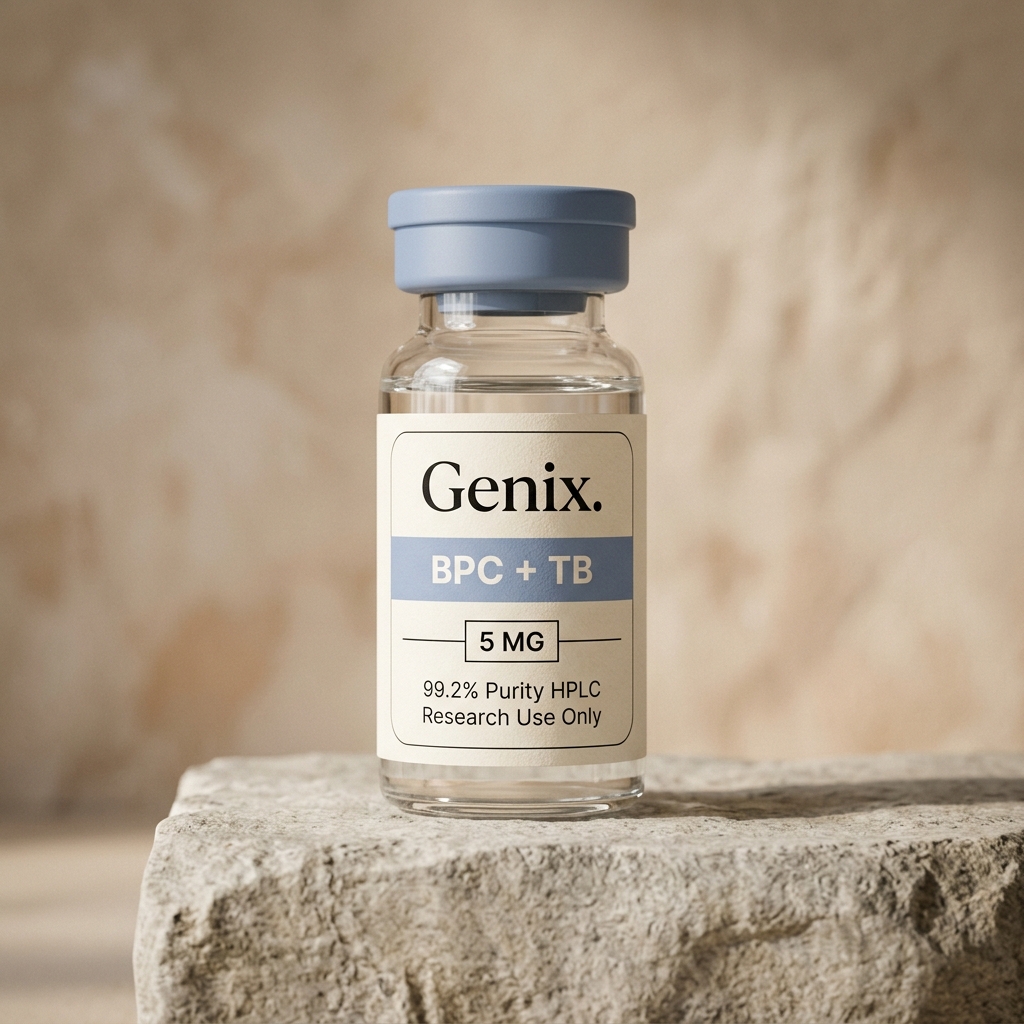
Purity of at least 99% by HPLC, LC-MS identity, and a batch COA in every order. Cold-chain shipping and same-day delivery in Bali. From $89 (Rp 1.450.000). Research use only.
Shop lab-tested BPC-157 + TB-500Frequently asked questions
How much BPC-157 should a person take daily?
There is no settled human dose, because most BPC-157 research is animal work. Studies report amounts scaled to body weight, not a fixed human number. Any real amount is a medical question a blog cannot answer. BPC-157 is for research use only, not human use.
What should you not mix with BPC-157?
In a lab, BPC-157 is reconstituted with bacteriostatic water only, never mixed with other peptides in the same syringe unless a study calls for it. Drug interactions in people are untested. Because the human picture is unclear, mixing questions belong with a doctor. This is research use only.
Is BPC-157 hard on the liver?
In animal research, BPC-157 has actually been studied for protecting the liver and gut, not harming them. But there is no long-term human safety data to lean on. So the honest answer is that liver effects in people are simply not established. Ask a doctor about your own health.
Which peptide does Joe Rogan take?
Joe Rogan has talked publicly about using BPC-157 for recovery from injuries on his podcast. That is a personal anecdote, not medical proof. What a public figure says he uses is not a dosing guide. BPC-157 is sold for research use only, not for human use.
Does the vial come with a dosing chart?
No. A research vial ships as a dry powder with a certificate of analysis, not a protocol. That is by design, because it is a research material, not an approved medicine. The most important paper in the box is the COA, which confirms purity and identity for the batch.
Takeaway
BPC-157 dosing comes down to two numbers, how much and how often, and most of what we know is animal research, not a human chart. Reconstitution is simple math, where water sets the concentration, not the amount. The single most useful thing you can check is the certificate of analysis. Above all, this is a research overview, and BPC-157 is for research use only.