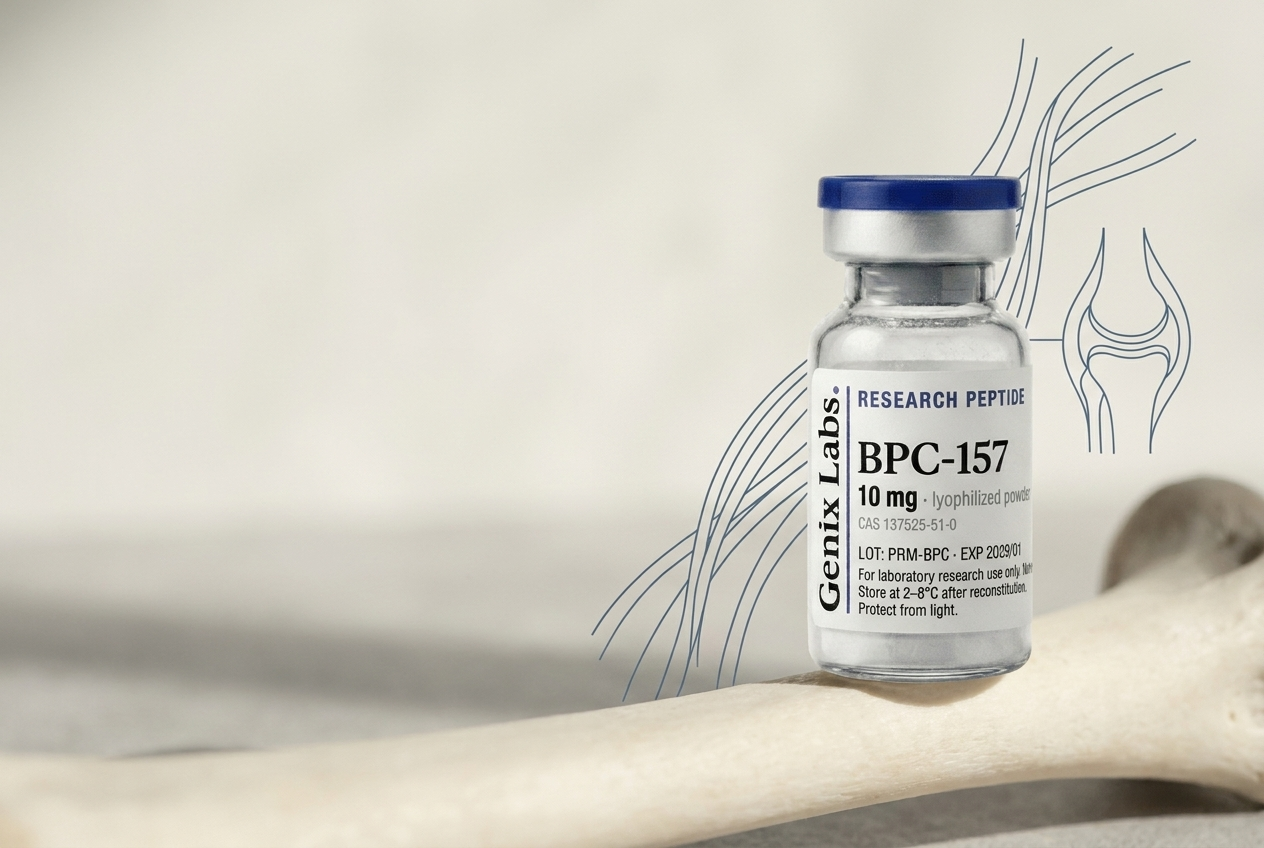

A joint that aches every time you train, climb stairs, or wake up is exhausting in a way that goes beyond the pain itself. Painkillers mask the signal, but they do not rebuild what is worn or torn. That gap is why peptides have become one of the most searched-for tools in joint recovery, led by BPC-157. This guide sorts the real research from the marketing: which peptides are studied for joints, which one actually has human trials, how they work, what to expect, and where the honest limits are. It is a research overview, not medical advice.
The quick answer
For joints, the research peptide with the most behind it is BPC-157, a stable peptide first found in a sequence of human gastric juice. It is studied for repairing tendons, ligaments, and connective tissue and for growing new blood vessels to an injury. TB-500 is its usual partner for wider, whole-body repair, and KPV is studied for calming inflammation. There is a twist worth knowing up front: the peptide type with actual human joint-pain trials is oral collagen peptides, not the injectable research peptides. None of these is a cure, and every one here is sold for research use only.
What are peptides for joint pain?
Peptides are short chains of amino acids, the same building blocks that make up proteins. Because they are small, they can carry signals to cells. In joint research, a handful of peptides are studied for one job: telling worn or injured tissue, the tendons, ligaments, and cartilage around a joint, to repair itself and to calm the inflammation that comes with an angry joint. That is a different aim from a painkiller, which quiets the pain signal without touching the tissue.
The word “peptide” covers two very different things here, and mixing them up is the most common source of confusion. Research peptides such as BPC-157, TB-500, and KPV are injected and are studied mostly in animals. Collagen peptides are a food-derived powder you swallow, and they are the ones with human joint-pain trials behind them. This guide keeps the two lanes clearly separate so you can see what is proven, what is promising, and what is hype.
- Peptides send repair and calming signals to a joint, rather than just masking pain.
- BPC-157 is the research peptide with the strongest joint and tendon story.
- TB-500 adds systemic reach; KPV is studied for inflammation.
- Oral collagen peptides are the type with real human joint trials.
- Injectable research peptides are studied, not proven, in people.
Do peptides actually work for joints?
The honest answer is split by type. For oral collagen peptides, yes, there is real human evidence: several randomized trials report less activity-related joint pain over three to six months. For the injectable research peptides such as BPC-157 and TB-500, the animal evidence is striking, but the human evidence is small and early, so the fair word is “studied,” not “proven.” Both can be true at once.
BPC-157 is the clearest example of the promise-and-caveat pattern. In animal models it speeds the healing of cut tendons, injured ligaments, and damaged muscle, and a 2025 systematic review of its use in orthopaedic sports medicine found genuinely encouraging preclinical results, alongside a blunt reminder that the controlled human trials are not there yet. So peptides are a serious area of joint research with encouraging signals, and they are not an approved medical treatment for any joint disease. This is research use only.
How do peptides ease pain and help healing?
The leading idea has three parts. First, peptides are studied for rebuilding tissue, telling tendon, ligament, and connective-tissue cells to grow and migrate into a wound. Second, they are studied for angiogenesis, the growth of new small blood vessels, which carries oxygen and nutrients into an injury that often has poor blood supply of its own. Third, some are studied for calming inflammation, so a swollen, irritated joint settles. Together that points to a joint that heals rather than one that is only numbed.
BPC-157 shows how this works at the cell level. In one well-known tendon study, it sped the outgrowth of tendon cells and boosted their ability to survive stress and migrate, through a signaling route called the FAK-paxillin pathway. It also raised growth-hormone-receptor levels in tendon cells. In plain terms, it appears to nudge the repair machinery of connective tissue into a higher gear, which is exactly why the joint and tendon world pays attention to it.
What is the best peptide for joints?
The best-studied research peptide for joints is BPC-157, full stop. It has the deepest base of animal work on tendons, ligaments, and connective tissue, and it is the one most people mean when they ask about peptides for joint pain. But “best” depends on what you want. If you want the option with real human trials, that is oral collagen peptides. If inflammation is the main problem, KPV is the one to read up on. Here is how the research peptides stack up.
| Peptide | Studied mainly for | Strength of joint evidence |
|---|---|---|
| BPC-157 | Tendon, ligament, and connective-tissue repair | Deepest research base for joints (animal) |
| TB-500 | Systemic tissue repair across the body | Broad repair signal, not joint-specific |
| KPV | Calming inflammation | Solid anti-inflammatory animal work |
| GHK-Cu | Collagen and connective tissue | More skin than joint, supportive role |
| Collagen peptides | Everyday joint pain and cartilage | The only type with human joint trials (oral) |
Notice what “best” does not mean. It does not mean a cure, and it does not mean one peptide beats all others for every goal. For all-round joint and tendon repair research, BPC-157 leads, which is why it is so often paired with TB-500 and stocked as a set. For proven, low-risk relief you can take by mouth, collagen is the sensible starting point.
Can BPC-157 help with joint pain?
Yes, BPC-157 is the peptide most researched for joint and tendon pain. It is a stable peptide first identified in a protein found in human gastric juice, and in animal studies it speeds the healing of tendon, ligament, and muscle injuries, protects tissue, and supports blood flow into a wound. Of every peptide here, it has the strongest joint story, which is why it dominates the searches and the forums.
BPC-157 was first studied by a research group at the University of Zagreb, led by Predrag Sikiric, starting in the 1990s. Since then dozens of animal studies have looked at its effect on the Achilles tendon, injured ligaments, muscle tears, and even bone-to-tendon healing. The catch is the one that runs through this whole field: the controlled human trials are small and few, so the dramatic animal results are not yet confirmed at the same scale in people.
TB-500: the systemic repair partner
TB-500 is a fragment linked to thymosin beta-4, a natural repair peptide that helps cells move and rebuild tissue. Its best-understood action is binding actin, a protein inside cells that drives their movement, which helps repair cells migrate into an injury. It is also studied for supporting new blood-vessel growth. Where BPC-157 tends to act locally, TB-500 is the systemic one, studied for muscle, tendon, and general recovery across the whole body.
That difference is exactly why the two are stocked together. For a single stubborn joint, BPC-157 is the local specialist; for bigger or multiple injuries, TB-500 widens the repair signal so it reaches tissue everywhere at once. As with BPC-157, there are no completed human efficacy trials for TB-500, so the evidence is animal work. Our TB-500 guide covers what it is studied for and how it differs from BPC-157.
What peptide is similar to BPC-157?
The peptide most often named alongside BPC-157 is TB-500. Both are studied for tissue repair, and they are paired so often that many people treat them as a single recovery stack. The key difference is reach: BPC-157 acts more locally at the injury, while TB-500 works systemically across the body. Together they cover a single sore joint and full-body recovery in one protocol.
Two more peptides sit in the same recovery family. KPV is the anti-inflammatory one, a tiny fragment of a natural hormone that is studied for calming an irritated, swollen joint. GHK-Cu, the copper peptide, is studied for collagen and connective tissue, more famous for skin but relevant wherever connective tissue needs support. All four are blended into the KLOW stack, which is why that blend keeps coming up in recovery discussions.
Peptides for joint pain and inflammation
A lot of joint pain is really inflammation: a joint that is swollen, warm, and irritated. The peptide studied most for that specific problem is KPV, a tripeptide (lysine, proline, valine) that is the tail end of a natural hormone called alpha-MSH. In animal models of inflammation it reduced the signals that drive swelling, which is why it comes up for an inflamed, angry joint rather than a clean structural tear.
BPC-157 is also studied for the inflammation side, not just the rebuilding side, which is part of why it feels broadly useful for joints. The honest caveat is the same as everywhere in this guide: this is mostly animal research, so the effect in people is expected to be gentle and to build over weeks, not to switch off pain the way a strong anti-inflammatory drug can. Our KPV peptide guide goes deeper on the anti-inflammatory mechanism.
Collagen peptides: the human-proven option
Here is the part the injectable-peptide sales pages skip. When it comes to actual human trials for joint pain, the winner is not BPC-157 or TB-500; it is humble oral collagen peptides. Collagen is the main protein in cartilage and tendon, and collagen peptides are simply collagen broken into small, absorbable pieces. Several randomized, placebo-controlled trials have tested them for joint pain.
A 2017 randomized trial found that specific collagen peptides reduced activity-related knee joint discomfort in physically active adults over twelve weeks, and earlier work in athletes and in osteoarthritis reported similar improvements over three to six months. Meta-analyses of knee osteoarthritis trials point the same way: modest but real reductions in pain. It is not a dramatic overnight effect, but it is the one joint-peptide story backed by human data and an excellent safety record.
| Type | How it is taken | Human joint evidence |
|---|---|---|
| Collagen peptides | Oral powder, daily | Yes, multiple randomized trials |
| BPC-157 | Injectable research peptide | Animal work; human trials still emerging |
| TB-500 | Injectable research peptide | Animal work; no completed human efficacy trials |
The sensible read is that these are complementary, not rivals. Collagen is the low-risk, proven daily base anyone can start with. The research peptides are the more powerful but less-proven tools that people explore for a specific injury. We stock the research peptides and are upfront that collagen is where the human evidence currently lives.
Where GHK-Cu fits
GHK-Cu, or copper tripeptide-1, is best known as a skin and collagen peptide, but it earns a mention here because joints are held together by connective tissue, and GHK-Cu is studied for collagen and tissue remodeling. It is a supporting player for joints rather than a headline act, which is why it shows up inside blends more than as a stand-alone joint peptide.
If you have read about “copper peptides” for recovery, this is the one. Its main research base is cosmetic and wound-healing rather than orthopaedic, so treat GHK-Cu as connective tissue support that complements BPC-157, not as a replacement for it. It is one of the four peptides in the KLOW blend for exactly that reason.
Peptides for joint pain and muscle growth
A common search pairs joint pain with muscle growth, hoping one peptide does both. The honest split is this: the joint-repair peptides here are not muscle-building drugs. BPC-157 and TB-500 are studied for repairing tissue after injury, which can help you train more consistently, but they do not add muscle the way a growth-hormone secretagogue or an anabolic compound is claimed to.
The indirect link is real and worth stating plainly: a joint that hurts less lets you train harder and more often, and consistent training is what actually builds muscle. So repair peptides support muscle growth by keeping you in the game, not by growing muscle directly. Expecting a joint peptide to be a mass builder is one of the more common mix-ups in this space.
Which joint problems are studied most?
Peptide research clusters around a few joint problems more than others. Knowing where the interest actually sits helps set realistic expectations, because the research does not spread evenly across every ache.
- Tendon injuries, such as Achilles, patellar (knee), and tennis or golfer's elbow. This is BPC-157's home turf.
- Ligament sprains and strains that heal slowly on their own.
- Osteoarthritis and cartilage wear, where oral collagen peptides have the human trials.
- Overuse and sports injuries, where TB-500 is explored for systemic recovery.
- General joint stiffness and inflammation, the angle KPV is studied for.
Notice the pattern: injectable research peptides cluster around tendons, ligaments, and acute injuries, while the everyday wear-and-tear of osteoarthritis is where the proven oral option (collagen) does its best work. Matching the tool to the problem matters more than picking the trendiest name.
How do peptides compare to cortisone and PRP?
Peptides do not exist in a vacuum. People weigh them against the standard options for a painful joint: painkillers, cortisone shots, and platelet-rich plasma (PRP). The clearest way to see the difference is that most conventional options either quiet pain or deliver a repair signal, while peptides are studied specifically as a repair signal.
| Option | What it mainly does | The trade-off |
|---|---|---|
| NSAID painkillers | Reduce pain and inflammation fast | Mask the signal; do not rebuild tissue |
| Cortisone injection | Powerful short-term inflammation relief | Repeated use can weaken tissue over time |
| PRP injection | Delivers your own growth factors to heal | Costly, clinic-only, mixed trial results |
| Collagen peptides | Support cartilage; proven mild pain relief | Gentle, slow, taken daily by mouth |
| Research peptides | Studied to rebuild tissue and blood flow | Human evidence still emerging; RUO |
None of these is strictly better than the others; they answer different questions. A painkiller helps you get through today. Peptides are explored by people who want to support the underlying repair rather than only muting the pain. That is a research goal, not a promise, and anything persistent or severe belongs with a doctor, not a vial.
Injectable or oral peptides for joints?
Peptides for joints come in two very different forms, and the form largely decides which peptide you are talking about. Oral collagen peptides are a daily powder with human joint trials behind them. The research peptides, BPC-157, TB-500, and KPV, are usually reconstituted and injected, because most peptides are broken down in the stomach before they can act.
| Form | How it is used | Notes for joints |
|---|---|---|
| Oral collagen | Daily powder in water or a shake | The human-tested option; low risk, gradual |
| Injectable (subcutaneous) | Reconstituted and injected | How research peptides are usually studied |
| Blended vial | One mix, several peptides | How KLOW packs joint, skin, and repair support together |
Whatever the form, storage and mixing decide whether an injectable peptide works as the research describes. A degraded peptide will not do the job. Our guides on reconstituting peptides and storing them in a hot climate cover how to keep a vial stable.
What are the side effects of peptide injections?
The most common side effects of peptide injections are local and mild: soreness, redness, swelling, or bruising where the needle goes in. Some people report headache, tiredness, or a brief flushed feeling. Those are the everyday reports. The bigger, more honest concerns are structural rather than symptomatic.
- Local injection-site reactions (soreness, redness, bruising) are the most common.
- Long-term human safety data is limited; these are research compounds, not approved medicines.
- An untested vial can be under-dosed or contaminated, which is a safety issue, not just value.
- Poor injection hygiene adds a real infection risk.
- Results are gradual, which tests patience more than anything else.
None of that means peptides are reckless; it means they deserve the same caution as any research tool. The single best way to shrink the risk is to buy only lab-tested product with a batch certificate of analysis, so you at least know what is really in the vial. Our BPC-157 side effects guide covers the specifics in more detail.
What people say on Reddit vs the evidence
Search “peptides for joint pain” and half the results are Reddit threads full of glowing anecdotes: healed tendons, pain gone in weeks, back to lifting. Those stories are worth reading for the practical tips, but they are not evidence. They skew positive (people who saw nothing rarely post), they lack any control group, and nobody can rule out that rest and time did the healing.
The useful way to read the forums is as a source of questions, not answers. If a thread swears BPC-157 fixed an elbow, treat that as a reason to check the actual research, which is what this guide summarizes, rather than proof. The animal science is genuinely promising and the human science is genuinely thin, and no amount of upvotes changes either fact.
Results: what to expect and when
Joint-peptide research plays out over weeks, not days. Early on, the goal is a calmer, less irritated joint. Over a full cycle, the aim is tissue that is better repaired and more resilient. It is a slow, cumulative process, which is exactly why the overnight-miracle claims are the ones to distrust.
| Time | What research setups tend to track |
|---|---|
| Weeks 1 to 2 | Early settling; less irritation for some |
| Weeks 2 to 4 | Movement feels a little easier day to day |
| Weeks 4 to 8 | Tissue has more time to repair and strengthen |
| Beyond 8 weeks | Gains hold with steady support, not a sudden jump |
Common mistakes people make
Most disappointment with joint peptides comes down to a few avoidable errors. Getting these right is often the difference between “nothing happened” and a real, if gradual, result.
- Skipping rehab. No peptide replaces load management, physio, and progressive strengthening.
- Expecting a cure. Peptides support repair; they do not reverse advanced arthritis.
- Quitting at week 2. Tissue rebuilds over a full cycle, not in the first fortnight.
- Ignoring collagen. The proven, low-risk option is often the one people overlook.
- Buying an untested vial. Without a certificate of analysis, you do not know what is inside.
Why purity and a COA matter most
A peptide is only as good as the vial it comes in. An under-dosed or contaminated product will not do what the research describes, no matter the claims on the label, and for something you may inject, that is a safety issue, not just a value one. That is why a certificate of analysis matters most. It shows the batch was tested for purity by HPLC and identity by LC-MS, with a real lot number you can match to your vial.
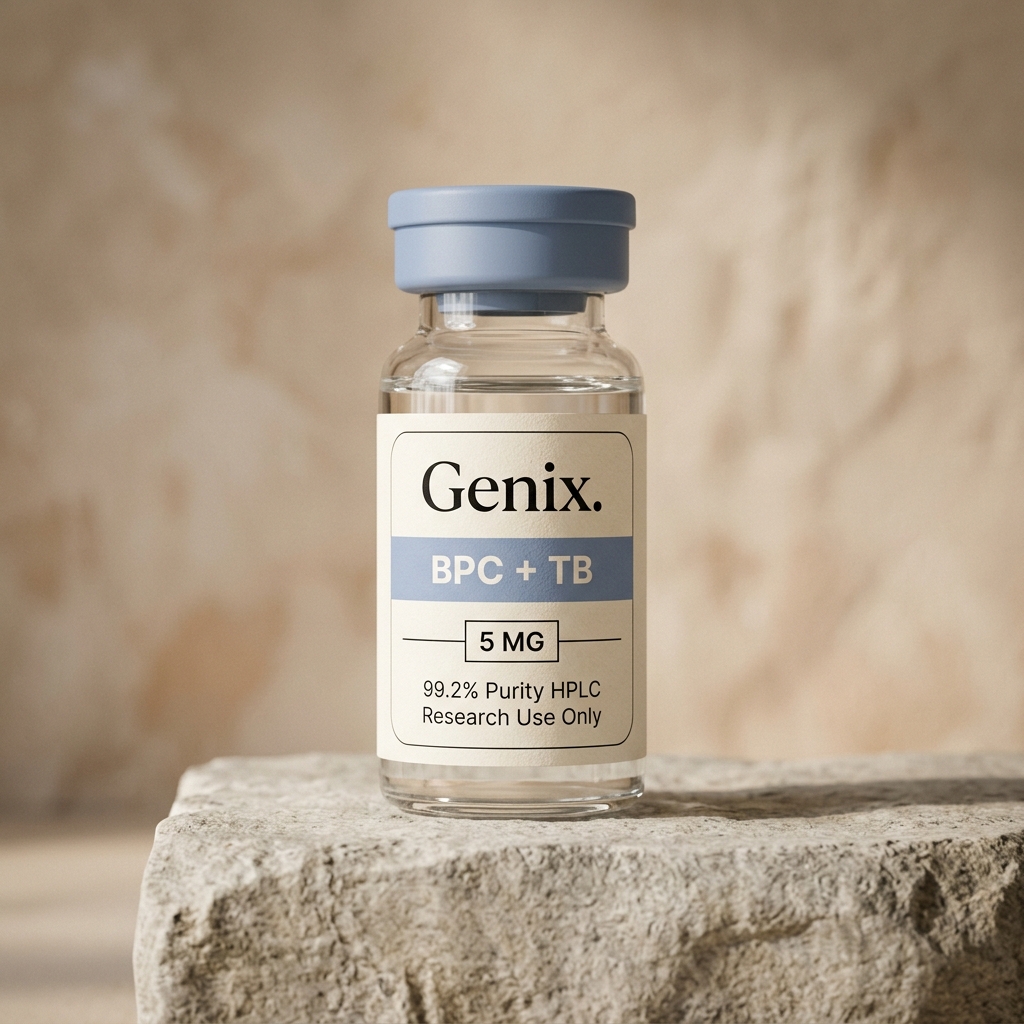
Purity of at least 99% by HPLC, LC-MS identity, and a batch COA in every order. Cold-chain shipping and same-day delivery in Bali. From $89 (Rp 1.450.000). Research use only.
Shop lab-tested BPC-157 + TB-500For the wider picture on repair peptides, the Recovery & Repair hub connects BPC-157 to the rest of the family, and our peptides for gut health guide shows how the same repair peptides are studied elsewhere in the body.
Frequently asked questions
What is the best peptide for joints?
BPC-157 is the research peptide most studied for joints, tendons, and ligaments, thanks to animal work on tendon and connective-tissue healing. For a human-proven option, collagen peptides are the one type with real joint-pain trials, but they are taken orally, not injected. The two answer different needs. Research use only.
Can BPC-157 help with joint pain?
BPC-157 is the peptide most researched for joint and tendon healing. In animal studies it speeds tendon, ligament, and muscle repair and supports new blood-vessel growth to injured tissue. Human trials are small and still emerging, so it is studied for joints, not proven as a treatment. Research use only.
What are the negative side effects of peptide injections?
The most common are local: soreness, redness, swelling, or bruising at the injection site. Because these are research compounds, long-term human safety data is limited, and an untested vial can carry impurities. Poor injection hygiene adds infection risk. Buying only lab-tested product with a certificate of analysis lowers the risk. Research use only.
What peptide is similar to BPC-157?
TB-500 is the peptide most often mentioned alongside BPC-157. Both are studied for tissue repair, and they are frequently paired because TB-500 works systemically across the body while BPC-157 acts more locally. KPV (anti-inflammatory) and GHK-Cu (connective tissue) are cousins in the same recovery family. Research use only.
Do peptides help joint pain and inflammation?
Some are studied for it. KPV, a fragment of the alpha-MSH hormone, is the peptide most researched for calming inflammation, and BPC-157 is studied for both repair and a quieter, less irritated joint. The evidence is mostly animal work, so results in people are gentle and build over weeks. Research use only.
Where can you buy peptides for joint pain?
Buy only from a source that publishes a batch certificate of analysis showing purity by HPLC and identity by LC-MS with a real lot number. Genix Labs stocks BPC-157 with TB-500 at 99 percent or higher purity, cold-chain shipped, with same-day delivery in Bali. Research use only.
Takeaway
Peptides for joint pain are real research tools, not magic. BPC-157 leads the injectable field, studied for repairing tendons, ligaments, and connective tissue and for growing new blood flow to an injury, with TB-500 as its systemic partner and KPV for inflammation. But the peptide type with actual human joint-pain trials is oral collagen, and that honest split is the whole story: promising animal science on one side, proven-but-gentle human evidence on the other. None of them replaces rehab or a proper diagnosis. Judge any product on its testing, not its promises. Every peptide here is for research use only, and this guide is education, not medical advice.