
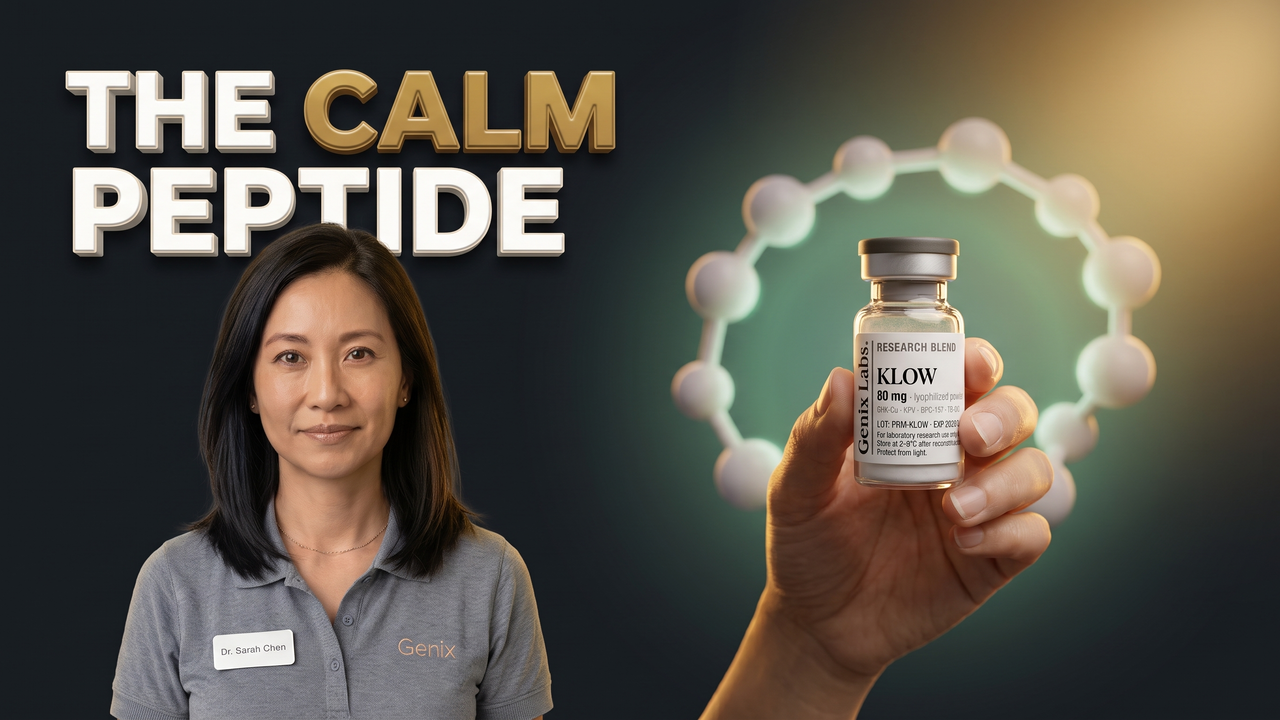
KPV does not get the headlines that BPC-157 or the GLP-1 peptides do. But it is one of the most interesting small peptides in research, studied for calming inflammation in the gut and skin. This guide explains what KPV is, what it is studied for, and how it fits a recovery stack. It is a research overview, not medical advice.
The quick answer
KPV is a tiny peptide, just three amino acids: lysine, proline, and valine. It is the active tail of a larger hormone called alpha-MSH. In research, it is studied for one main job: calming inflammation, especially in the gut and skin. It is sold for research use only.
What is KPV?
KPV is a fragment of alpha-MSH, a hormone your body already makes. Scientists found that the last three amino acids kept much of the anti-inflammatory action while being far smaller and simpler. That small size is a big deal, because it helps KPV move into cells more easily than most peptides. New to peptides? See What Are Peptides?
What are the benefits of KPV peptide?
In research, KPV is studied mainly for calming inflammation. The strongest signals are in the gut, where it is looked at for colitis-style irritation, and in the skin, for redness and slow-healing spots. It is a research material, so these are studied effects, not proven human benefits.
- Calms gut inflammation in colitis-style animal models.
- Supports skin healing and less redness in early studies.
- Small size lets it enter cells and act from the inside.
- Studied as a gentler, quieter peptide than the big hitters.
How does KPV work?
The leading idea is that KPV travels inside a cell and quiets the signals that drive inflammation, rather than just blocking one receptor on the surface. In the gut, research also points to a transporter called PepT1 that helps carry KPV into the cells that line the intestine. That is why the gut is its most studied home.
KPV dosing questions
There is no established human dose for KPV, because the human trials do not exist yet. Research reports small amounts scaled to body weight in animals. Any specific number for a person is a medical question a blog cannot answer. KPV is for research use only, not human use.
Oral versus injectable KPV
KPV is unusual because research has looked at oral and topical forms, not just injections. The small molecule survives digestion better than most peptides, which is why oral study is even on the table. Even so, oral research use is still research, not an approved product.
| Form | Why research looks at it | In our vial |
|---|---|---|
| Injectable | The standard route for most peptides | Yes, in the KLOW blend |
| Oral | KPV is small enough to survive digestion | Research interest |
| Topical | Studied for skin redness and healing | Research interest |
Who should not take KPV peptide?
Since KPV is sold for research use only, no one should take it as a treatment. In a broader sense, anyone pregnant, nursing, or on other medicines should not experiment, because interactions are untested. Health decisions belong with a doctor, not a website. This is not medical advice.
Is KPV the safest peptide?
KPV has looked well tolerated in early research, with few reported effects, which is why people call it gentle. But well tolerated in a study is not the same as proven safe in people. There is no long-term human data. Treat any safety claim with care, and remember this is research use only.
KPV: morning or night?
There is no proven best time of day for KPV in people, because human timing studies do not exist. Some research routines simply keep it consistent, at the same time each day, so the signal stays steady. Timing is a research design choice, not a personal instruction. Research use only.
KPV in the KLOW recovery stack
KPV is one of four peptides in the Genix KLOW blend, alongside GHK-Cu, BPC-157, and TB-500. The idea is coverage: BPC-157 and TB-500 for tissue repair, GHK-Cu for skin, and KPV for calming inflammation, all in one vial. See also BPC-157 benefits and TB-500.
- GHK-Cu handles skin and collagen.
- BPC-157 and TB-500 are the tissue-repair pair.
- KPV adds the anti-inflammatory angle.
- One reconstitution instead of four separate vials.
Why purity matters more than hype
KPV is only as good as the vial it comes in. An under-dosed or dirty product makes any research meaningless. That is why a certificate of analysis matters most. It shows the batch was tested for purity by HPLC and identity by LC-MS, with a lot number that matches your vial.
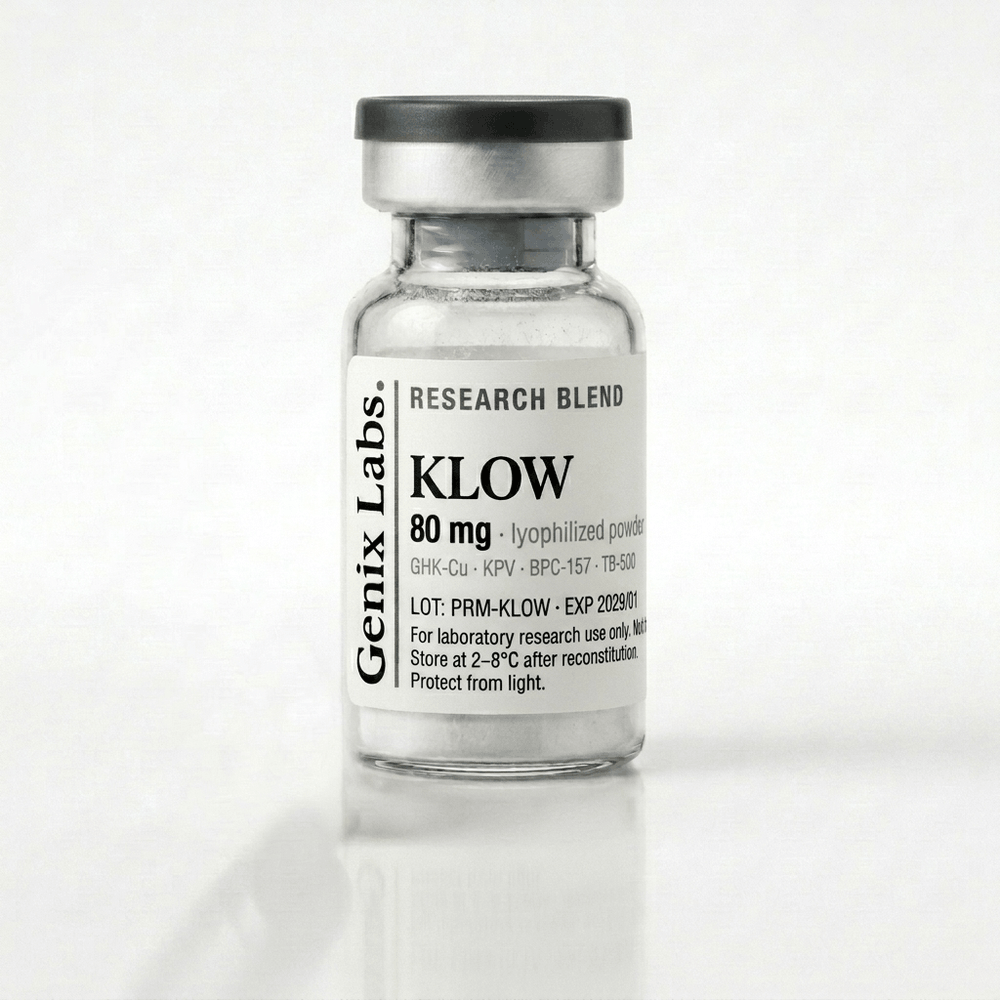
GHK-Cu, BPC-157, TB-500, and KPV in one vial. Purity of at least 99% by HPLC, LC-MS identity, and a batch COA in every order. $249 (Rp 3.990.000). Research use only.
Shop the lab-tested KLOW blendFrequently asked questions
What are the benefits of KPV peptide?
In research, KPV is studied mainly for calming inflammation. The strongest signals are in the gut, where it is looked at for colitis-style irritation, and in the skin, for redness and slow-healing spots. It is a research material, so these are studied effects, not proven human benefits.
Who shouldn't take KPV peptide?
Since KPV is sold for research use only, no one should take it as a treatment. In a broader sense, anyone pregnant, nursing, or on other medicines should not experiment, because interactions are untested. Health decisions belong with a doctor, not a website. This is not medical advice.
How much KPV should I inject daily?
There is no established human dose, because the human trials do not exist yet. Research reports small amounts scaled to body weight in animals. Any specific number for a person is a medical question a blog cannot answer. KPV is for research use only, not human use.
Is KPV the safest peptide?
KPV has looked well tolerated in early research, with few reported effects, which is why people call it gentle. But well tolerated in a study is not the same as proven safe in people. There is no long-term human data. Treat any safety claim with care.
Can KPV be taken orally?
KPV is unusual because research has looked at oral and topical forms, not just injections, since the small molecule survives digestion better than most peptides. Even so, oral research use is still research, not an approved product. Genix sells KPV inside the KLOW blend for research use only.
Takeaway
KPV is a small three-amino-acid peptide, studied mostly for calming inflammation in the gut and skin. Its size lets it slip inside cells, which is part of why researchers find it interesting. Human data is thin, so read the benefits as research, not a promise. It ships inside the KLOW blend, and like everything Genix sells, it is for research use only.